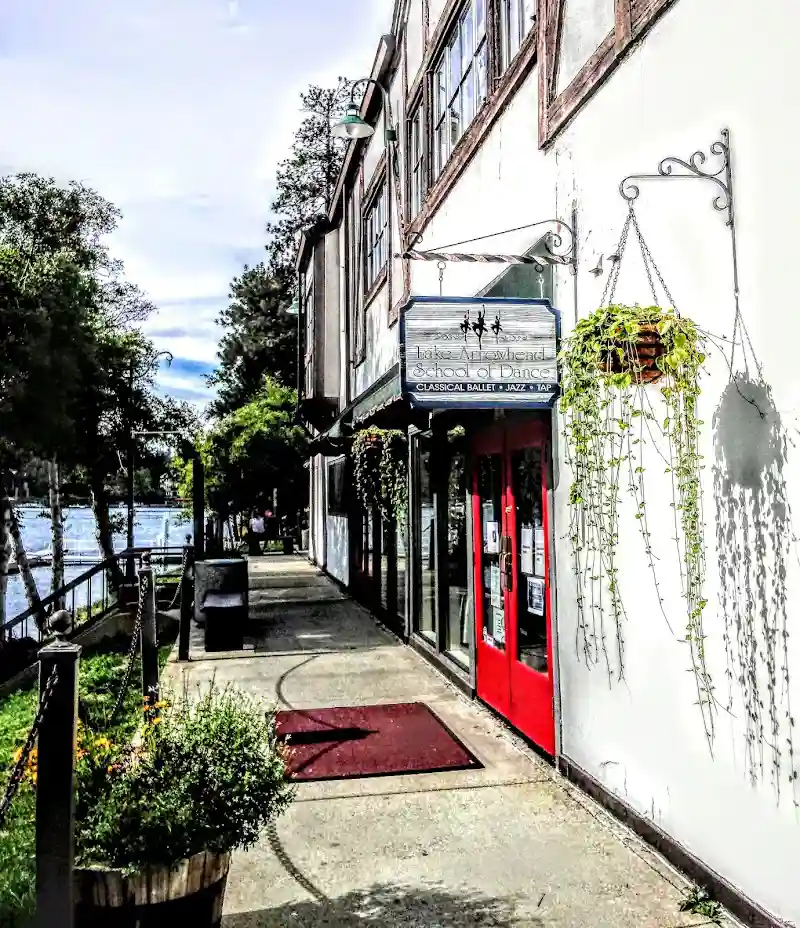
Lake Arrowhead School of Dance
Address
28200 California 189
Lake Arrowhead, California 92352
About Lake Arrowhead School of Dance
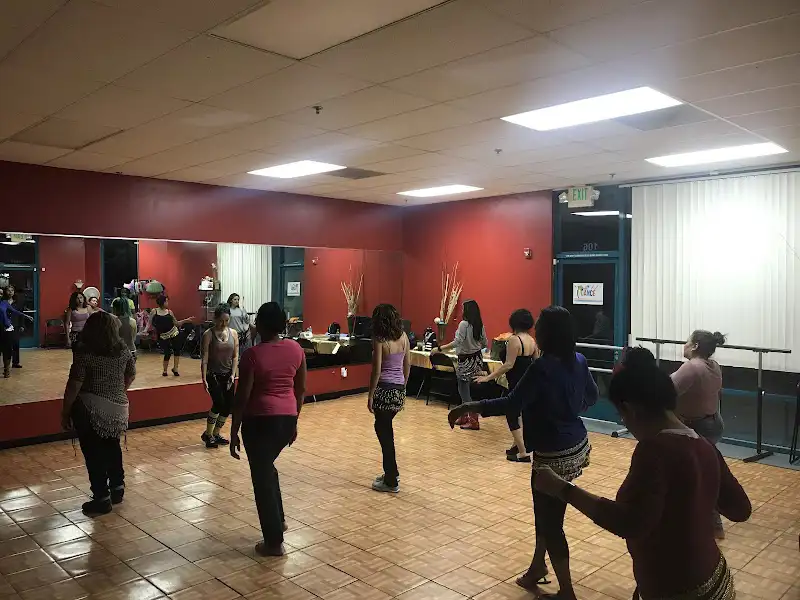
Nestled in the picturesque setting of Lake Arrowhead, California, the Lake Arrowhead School of Dance offers a vibrant and diverse range of dance education for students of all ages. With a commitment to nurturing artistic talent and fostering a love for movement, the school provides comprehensive training in foundational and contemporary dance forms. Students can explore the elegance of Ballet, the expressiveness of Jazz and Contemporary, the rhythm of Hip Hop and Tap, and the dynamic storytelling of Musical Theater. The studio also offers Barre classes, focusing on strength, flexibility, and technique. The dedicated instructors at Lake Arrowhead School of Dance guide students through carefully structured programs, ensuring a supportive and inspiring learning environment. Whether aspiring to join competitive teams or simply seeking to develop a lifelong passion for dance, Lake Arrowhead School of Dance is a cornerstone of the local arts community, empowering dancers to reach their full potential.
Styles offered at Lake Arrowhead School of Dance
Programs from Lake Arrowhead School of Dance
48 programs available
Classes
Charter School Tuition
Tuition, per class
Drop in fee
Kinder-Combo
Children are ready to be introduced to a class format that aims to prepare them for a “real” ballet class. Basic ballet concepts such as, 1st and 2nd position plies, releves, tendus, and dégagés will be introduced at the ballet barre. Fun, Creative movement ,such as pantomime, will be augmented by more coordination and sequence-related exercises. This enhances imagination and makes the class lively and engaging. Floor formations that will teach children their “place” in the room, traveling movements that emphasize pointed feet and straight legs, posture, placement and comportment of Classical Ballet. In tune with overall learning the curriculum incorporates activities and dances that include; number counting, the alphabet and cognitive skills.Intro to tap and tumbling are the second half of the class for development of rhythm and coordinative skills.
Pre-School 4-5
This is your child’s first introduction to dance class. For the young dancer this class teaches not only basic ballet, tap, and tumbling curriculum, but peer interaction. For many young dancers this is the first group activity where they have a chance to interact with others their age and learn the dynamics of being in a group, all very important life skills. Students learn to take turns, they learn about personal space, when it is appropriate to hold hands in, a partner dance or a circle dance with the class, and when it is necessary to leave their hands to themselves. All these skills are learned while enjoying the thrills of movement. Young dancers also get to practice educational basics that are learned at school such as counting as the teacher asks them to do 4 plies or 8 tendus. They learn things such as colors, left vs right and other movement opposites such as fast vs slow, hard vs soft. Being able to repeat and put into practice the basics they learn at school in a fun environment outside of their normal learning place can greatly increase the amount of information they retain and how well they can use this information. These dance classes for young children are great for personal growth and learning regardless of their desire to continue dancing in the future. Dancers must be potty trained.
Pre-School 3-4
This is your child’s first introduction to dance class. For the young dancer this class teaches not only basic ballet, tap, and tumbling curriculum, but peer interaction. For many young dancers this is the first group activity where they have a chance to interact with others their age and learn the dynamics of being in a group, all very important life skills. Students learn to take turns, they learn about personal space, when it is appropriate to hold hands in, a partner dance or a circle dance with the class, and when it is necessary to leave their hands to themselves. All these skills are learned while enjoying the thrills of movement. Young dancers also get to practice educational basics that are learned at school such as counting as the teacher asks them to do 4 plies or 8 tendus. They learn things such as colors, left vs right and other movement opposites such as fast vs slow, hard vs soft. Being able to repeat and put into practice the basics they learn at school in a fun environment outside of their normal learning place can greatly increase the amount of information they retain and how well they can use this information. These dance classes for young children are great for personal growth and learning regardless of their desire to continue dancing in the future. Dancers must be potty trained.
Music and Rhythm
This is a mommy and me class designed to introduce the young dancer to basic knowledge and skills for all components of music and body coordination. It is designed to train and coordinate the audio perception and kinesthetic reaction to music. It teaches children self-coordination and self-control while playing musical games and storytelling. It encourages parents to be active participants in the activities with their children and share that very emotional, uniting, and dynamic excitement for their own children, as well as relive their own childhood with their children for just a short time each week. It is a very bonding experience and is as precious as priceless.
Acro-Tumbling 1 & 2
This program will introduce technique based acrobatic and tumbling skills to the beginner or intermediate student. Boys and girls will be learning numerous basic tumbling skills including forward and backward rolls, handstands, cartwheels, and walkovers. The intermediate students will build up to more advanced skills such as round-offs, front and back hand springs, and aerial work. These skills may ultimately be incorporated into the student’s dance routines. There will also be a focus on conditioning, including strength and stretching.
Musical Theater 2
We will focus on dance numbers from musicals such as: Annie, Cats, and Billy Elliot and more. Musical theatre uses dance in service of a story, therefore every week, we will learn a dance number from the perspective of a marching band, kids in a spelling bee, or people in an old west show. We will use a variety of vocabulary and techniques (from ballet to tap to hula to ballroom) but only insofar as they help tell a story.
Musical Theater 1
We will focus on dance numbers from musicals such as: Annie, Cats, and Billy Elliot and more. Musical theatre uses dance in service of a story, therefore every week, we will learn a dance number from the perspective of a marching band, kids in a spelling bee, or people in an old west show. We will use a variety of vocabulary and techniques (from ballet to tap to hula to ballroom) but only insofar as they help tell a story.
Hip Hop ( Intermediate)
Hip Hop offers all the benefits of participating in a team sport or academic organization. It allows the dancers to unwind, learn new dance moves,express themselves, and gain rhythm while spending time with peers. The foundation of hip hop stems from African Dance. Our highly trained teachers teach dancers to loosen their movements, isolate specific parts of the body, while learning controlled dance movements. Other benefits of Hip Hop are: increased strength and flexibility, improved cardio-vascular health, adaptable for all ages, improved stamina, improved work ethic, improved confidence, and goal setting. No pre-requisite required
Teen Jazz/Hip-Hop
This course is designed to teach the basic movements that will incorporate jazz and hip-hop dance. The course will be beginning to intermediate level depending on students enrolled. Each student will learn the warm-up which include stretching, squats, crunches, arm work (push-ups) and isolations which are the basic aspects of jazz and hip-hop. The age of this class will start at 12 up to adults. No audition is necessary for this class. Jazz dance has rooted from Black social dances and white ballroom offshoots. Hip-hop stems from hip hop culture and music, borrowing elements from styles like African dance, tap and ballet. The class will be fun and exciting and a great way to end a challenging week.
Contemporary
Contemporary dance is a genre of dance performance that developed during the mid-twentieth century and has since grown to become one of the dominant genres for formally trained dancers throughout the world, with particularly strong popularity in the U.S. and Europe. It consists of ballet, jazz and modern movements.
Modern 1 & 2
This class is for Ballet 2 and up. Modern Dance is a form of contemporary theatrical and concert dance employing a special technique for developing the use of the entire body in movements expressive of abstract ideas.
Adult Tap
This class offers an exciting alternative to traditional exercise routines. Designed for teenagers and adults alike, it focuses on the art of tap dancing. Participants will discover the exhilaration of tap while learning moves set to both classical and contemporary music. The class caters to all skill levels, starting from the basics and progressing alongside the tap students.
Tap 3 & 4
The dancers in this level of tap begin to create more complex sounds and combinations while incorporating challenging temp and rythm changes to the students’ movements. The class will become more fast paced as students develop more speed and control of their footwork allowing them to experiment with different counting patterns and level changes.
Tap 1 & 2
This level introduces the students to fundamental tap techniques arranged in combinations and performed in class as a solo or group demonstration. The students will learn how to perform with energy and how to bring their own personality to each and every performance. The main goals in the beginning tap levels are identifying, utilizing and demonstrating tap terminology as well as understanding tap as a form of entertainment. Students will learn different elements of classical, rhythmic, and modern tap dancing.
Jazz 4-5
Jazz 4-5 is technically and musically demanding and the class moves at a fast pace. This class has a greater emphasis on perfecting technique (such as pelvic and back stability), performing skills, vocabulary and varied styles. There is an emphasis on seamlessly connecting movements and skills into a refined fluid movement.Students acquire and develop an advanced awareness and control of effective posture and body alignment. This level prepares dancers for a professional career if they so choose.
Jazz 3
This is a intermediate class with an emphasis placed on body placement, proper technique, stretching , development of skills for learning new movement styles like( Fosse, Michael Kid, Chester Whitmore, Michael Peters, to name a few. We will also look at some of the new Choreographer styles like Brian Freedman. Students also continue to work on developing performance skills such as style, focus and energy.
Jazz 2
A beginning/intermediate jazz class that stresses technique, stretching, isolations, focus, style and energy. Students work on learning the difference between ballet and jazz movements and correct body alignment, coordination, strength and flexibility. Jazz dance vocabulary is expanded through across the floor exercises and simple combinations.
Beginning Pointe
Beginning Pointe is for the dancer to prepare and strengthen the body, with very specific exercises, before going on pointe. When the dancer is ready for pointe work this class is designed to help the dancer to slowly acclimate to wearing their pointe shoes. As the student gains strength, she begins to perform a wider range of movements on pointe. Eventually, she will learn to perform on pointe almost all movements in Classical Ballet.
Pointe Program
The Student should have completed 3 years of intensive training, before attempting to dance on pointe. Our Pointe classes teach advanced students the classical ballet techniques involved in pointe work, in which a ballet dancer supports all body weight on the tips of fully extended feet within pointe shoes. A dancer is said to be en pointe when the dancer’s body is supported in this manner, and a fully extended vertical foot is said to be en pointe when touching the floor, even when not bearing weight. Pointe work is performed while wearing pointe shoes, which employ structural reinforcing to distribute the dancer’s weight load throughout the foot, thus reducing the load on the toes enough to enable the dancer to support all body weight on fully vertical feet. All dancers must be assessed before going on pointe. Beginning Pointe is for the dancer to prepare and strengthen the body, with very specific exercises, before going on pointe. When the dancer is ready for pointe work this class is designed to help the dancer to slowly acclimate to wearing their pointe shoes. As the student gains strength, she begins to perform a wider range of movements on pointe. Eventually, she will learn to perform on pointe almost all movements in Classical Ballet.
Ballet (Level 2-5) Program
This curriculum encourages and empowers the student towards artistic expression while emphasizing technique, musicality, balance, stamina and strength. Step by step the curriculum provides age-appropriate progressions that work cohesively with the development of the young dancers body. Level 2 is when a dancer is carefully evaluated for pointe work. Imbedded in classical tradition the curriculum is derived from the French, Russian, and Italian systems of training that has been adopted around the world by professional schools. This syllabus prepares the dancer to continue to pursue dance as a professional or a gifted viewer. The dancer is expected to be taking 4-8 classes a week to qualify for these levels.
Ballet A
Foundations for Ballet A bridges a students transition from the Children’s Program into a more structured class environment. They are introduced to a higher level of formal training consisting of barre and centre work. Posture, placement, precise technique and comportment of classical ballet will be emphasized. The exercises introduced at this level focus on alignment, flexibility, and coordination to develop a strong foundation of physical and cognitive understanding necessary for Classical Ballet training. Pantomime is added as a creative enhancement to the dancers Classical training.
Pre-School & Kinder
These classes will introduce the art of dance style with focus on rhythm and coordination.
Acro-Tumbling
Tumbling is the skill of executing gymnastic feats such as somersaults, handsprings, tucks, ariels and more. It broadens a students dance skills and also builds body strength.
Musical Theatre
Musical theater is an excellent class to take in order to learn how to use your facial expressions and body language in order to enhance your dance.
Hip Hop
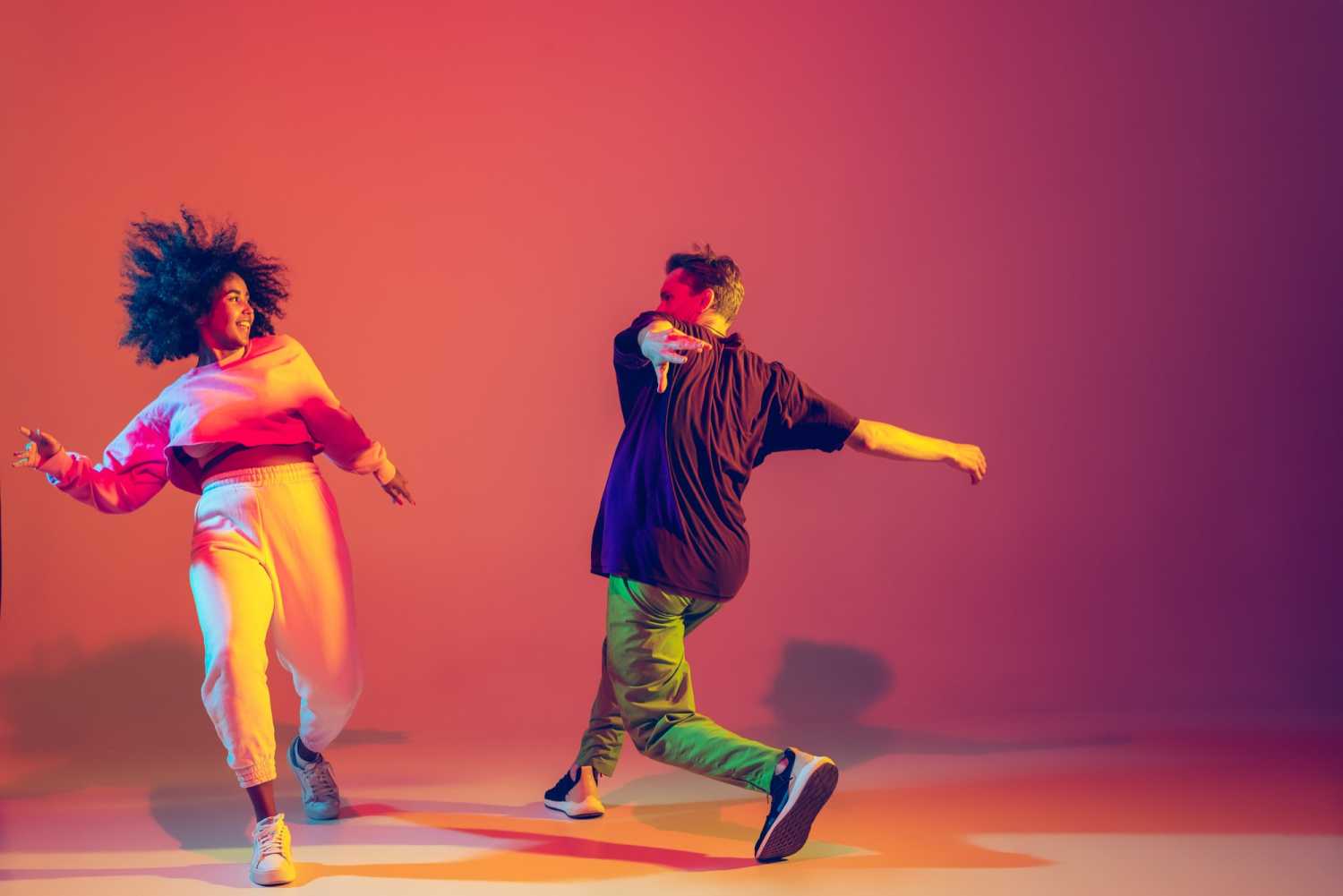
Hip Hop dance refers to street dance styles primarily performed to hip hop music or that have evolved as part of hip hop culture. It includes a wide range of styles primarily breaking, locking, and popping which were created in the 1970s.
Contemporary
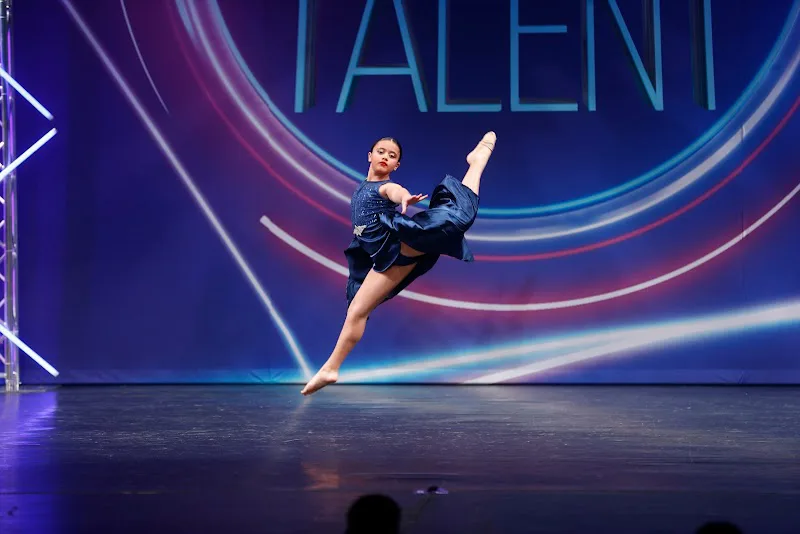
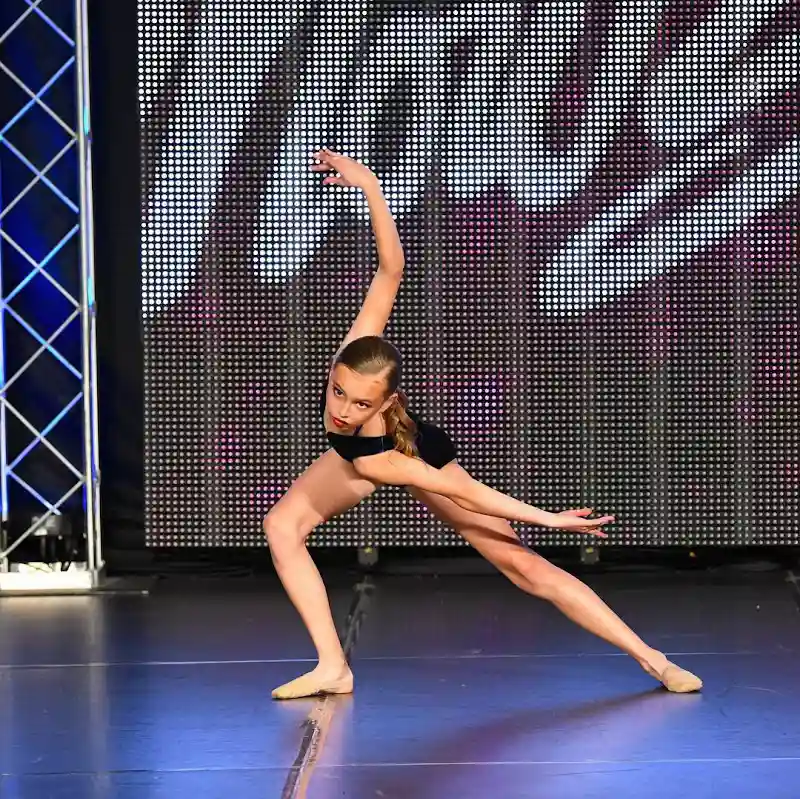
Contemporary dance is expressive, and strives to connect the mind and the body through fluid dance movements. This genre of dance teaches dancers the technique of ballet, but also how to move their bodies in new and creative ways.
Tap
Tap is characterized by rhythmical tapping of the toes and heels. This genre of dance is upbeat and helps dancers better understand how to move to different rhythms in music.
Jazz
Jazz dance, a vibrant art form with roots tracing back over two centuries in America, is employed in various styles including musical theatre, funk, hip-hop, and contemporary moves.
Ballet
Ballet is the staple for all performance dance disciplines, creating beautiful lines, poise and gracefulness while executing balance and flexibility.
Pre/Beginning Pointe
Pre/Beginning Pointe class held in Studio 2 as part of the Junior Program.
Pointe
Pointe class held in Studio 1 as part of the Trainee Program.
Ballet I-II Technique
Ballet I-II Technique class held in Studio 2 as part of the Junior Program.
Ballet III-V Technique
Ballet III-V Technique class held in Studio 1 as part of the Trainee Program.
Character Dance Class
Character Dance Class offered during the Summer Session.
Intro to Character
Intro to Character class held in Studio 1 as part of the Young Dancer Workshop.
Contemporary
Contemporary class held in Studio 1 as part of the Trainee Program.
Ballet B
Ballet B class held in Studio 1 as part of the Young Dancer Workshop.
Lyrical/Modern
Lyrical/Modern class held in Studio 2 as part of the Junior Program.
Jazz
Jazz class held in Studio 2 as part of the Junior Program.
Jazz
Jazz class held in Studio 1 as part of the Young Dancer Workshop.
Pointe/Variations
Pointe/Variations class held in Studio 1 as part of the Trainee Program.
Courses
Jazz 1
Jazz dance has rooted from Black social dances and white ballroom offshoots to stage show such as: minstrel shows, tap dancing, Irish jigging, English Clog dancing and African rhythmic stamping. Many shows (movies, TV, and stage) incorporate jazz dancing. Classes in this program also catalyze children’s psychological development and improve their concentration memory and discipline. The students in this class learn basic jazz steps with an emphasis on stretching; for greater range of motion, strength, for jumps and leaps, balance, and isolations for for movement quality. They will explore both traditional jazz as well as modern jazz through center floor combinations. This class provides the dancer with a sense of well-being, it builds self -confidence and builds social skills. This is a 2 year course.
Ballet 1
Ballet 1 is a two year course that underscores the seriousness of a child’s commitment to study and progress in the Art of Ballet. This class focuses on building a solid Ballet Technique with an emphasis on proper body placement to ensure safe execution as the skill levels advance. Ballet 1 is much more structured and intense. It is the first time young aspiring dancers are made to understand the dedication necessary to achieve their goals bearing in mind that BALLET IS THE FOUNDATION FOR ALL DANCE GENRE.
Ballet B
Ballet B continues to enhance the techniques emphasized in Ballet A. Posture, placement and comportment are stressed while expanding the students vocabulary. The students keep a journal with the correct terminology, spelling and definition of each of the exercises presented at the barre and centre work. Patterns and combinations increase in intensity and there is more focus on balance, flexibility and agility. Technique continues to be emphasized as new steps are introduced. Pantomime is enhanced and expanded upon by developing and encouraging students to perform story telling ballets. This is a 2-3 year course.
Camps
Acrobatics Summer Program
Acrobatics Summer Program classes are held twice per week.
Frequently Asked Questions
How do I contact Lake Arrowhead School of Dance?
Call Lake Arrowhead School of Dance at (909) 336-1359 or visit http://www.lakearrowheadschoolofdance.com/.
What are Lake Arrowhead School of Dance's prices?
Classes at Lake Arrowhead School of Dance range from $20 to $750.
Does Lake Arrowhead School of Dance have a website?
Yes, you can find Lake Arrowhead School of Dance online at http://www.lakearrowheadschoolofdance.com/.
What city is Lake Arrowhead School of Dance in?
Lake Arrowhead School of Dance is in Lake Arrowhead, California.
What is Lake Arrowhead School of Dance's phone number?
You can phone Lake Arrowhead School of Dance at (909) 336-1359.
More studios near this location
Discover other dance studios around Lake Arrowhead, California.