Southern California Ballet
Address
12285 World Trade Drive
San Diego, California 92128
Opening Hours
- Monday: 3:30 - 7:00 PM
- Tuesday: 3:30 - 7:00 PM
- Wednesday: 3:30 - 7:00 PM
- Thursday: 3:30 - 7:00 PM
- Friday: 3:30 - 7:00 PM
- Saturday: 9:00 AM - 12:00 PM
- Sunday: Closed
About Southern California Ballet
Southern California Ballet, located in San Diego, California, is a distinguished institution offering comprehensive dance education for students of all ages and levels. Founded in 1983 as Black Mountain Dance Center, the studio has evolved into a prominent center for professional ballet training. Under the artistic direction of Martha Leebolt and Toby Batley since 2017, Southern California Ballet employs a refined syllabus built upon the Cecchetti foundation, enhanced by their extensive professional experience. This methodology includes an objective annual assessment process for student progression. The academy's curriculum is structured into six levels, from Creative (ages 4-5) to the advanced Company Level, a pre-professional program preparing dancers for careers. Core training emphasizes classical ballet technique, complemented by instruction in Jazz, Modern, and Tap. The faculty is comprised of accomplished professionals, including Andrea Rose, Ian Isles, Katie White, Kerri DeNies, Lauren Worley, Leah Zabezhinsky (Cecchetti Teaching Certified), Lili Olah, Tonatiuh Gómez, Trystan Merrick, Veronica Giolitto, Veronika Part (former ABT principal), and Wendy Cormier (MFA in Ballet, Cecchetti certified, over two decades of experience). Kerri DeNies also leads a specialized program for children with unique physical needs. Southern California Ballet is renowned for its high-quality, performance-oriented productions, staging annual classics like "The Nutcracker," "Alice in Wonderland," and "Cinderella" at the Poway Center for the Performing Arts. As a nonprofit organization, they are dedicated to community engagement through adaptive dance, outreach performances, workshops, and library classes, fostering a connection with the wider community.
Styles offered at Southern California Ballet
Programs from Southern California Ballet
84 programs available
Classes
adult dance classes
If you’re looking for adult dance classes, go here .
youth academy
Use this form to request a trial dance class in our youth academy. Then, we’ll get in touch with you to schedule the trial.
Adaptive Dance Program
Southern California Ballet’s Adaptive Dance Program is designed for adults with cognitive and learning disabilities. Inaugurated with a grant from The Rancho Bernardo Community Foundation in 2019, SCB continues to offer discounted dance classes for members of the San Diego community.
Intermediate Pointe
When students reach the Intermediate level and have proven that they have sufficient strength and ability on pointe, they will progress to the Intermediate Pointe class and start working on more complex and advanced pointe work. At this level, a student is required to take four ballet classes per week.
Pointe-Work Prep
This is a transitional class where, at some point, students receive permission to go on pointe and purchase their pointe shoes. The class consists of strengthening and also ballet exercises done without pointe shoes, which progress to being done on pointe when the student receives permission.
Pre-Pointe Stretch
This class is a body conditioning/exercise class designed to prepare the students’ bodies for pointe work. In addition to this class, a student is required to be concurrently taking two ballet classes per week.
Adult Tap
The adult classes provide us the opportunity to bring the joy of dance to everyone. Whether you danced earlier in life and want to pick up where you left off, or have no experience whatsoever, our teachers are here to show you that anyone can get involved.
Adult Ballet
The adult classes provide us the opportunity to bring the joy of dance to everyone. Whether you danced earlier in life and want to pick up where you left off, or have no experience whatsoever, our teachers are here to show you that anyone can get involved.
Adult Intro to Ballet: Absolute Beginners
Have you ever dreamed of taking a ballet class, but felt it was too late, or were too intimidated to do so? Learn the basics of ballet and get started on your own ballet journey in a fun and relaxed environment with other beginner dancers.
Weekly Adult Ballet Classes
For adults at any level, and teenagers who are new to ballet. Whether you are a beginner or previous professional, ballet class is a wonderful way to stay in shape, stretch tight muscles, challenge your mind and feel beautiful.
Different styles of dance, including jazz, contemporary, and character
Exposure to a variety of dance forms beyond classical ballet, including the energetic movements of jazz, the expressive nature of contemporary, and the storytelling of character dance.
Body conditioning
Exercises and training methods designed to strengthen the body, improve stamina, and enhance overall physical condition crucial for dancers.
Concentrated classes of allegro, pirouettes and/or pointe
Intensive sessions designed to hone specific technical skills such as quick footwork (allegro), controlled turns (pirouettes), and the advanced technique of dancing on pointe.
Ballet technique
Concentrated Ballet technique classes focusing on fundamental movements and positions, essential for building a strong foundation in classical ballet training.
Ballet Technique 4
Ballet Technique 4 & Boys Ballet
Ballet Technique 3 & Boys Ballet
Ballet Technique 2 & Boys Ballet
Ballet Technique 1 & Boys Ballet
Ballet Technique Prep & Boys Ballet
Creative Ballet 2
Creative Ballet 1
Modern
Hip-hop
Jazz
Character
Freestyle ballet
Ballet Technique Classes
SCB’s boys dance program offers classes in male ballet technique for students of any gender identity who may traditionally encounter stigmas associated with their participation in ballet.
Company Jazz
Company Jazz is a dance form with African roots and evolving technical movements, characterized by isolations, a low center of gravity, and high energy, offering wide variation in style and technique.
Company Modern
Company Modern dance, a dominant genre for formally trained dancers, combines ballet's strong legwork with a modern focus on the torso, contract-release, floor work, fall and recovery, and improvisation.
Company Character
Company Character dance comprises traditional folk or national styles, integral to classical ballet repertoire for giving story ballets their cultural and chronological character.
Company Stretch & Strengthen
Company Stretch & Strengthen is a vital all-over body maintenance class that draws on aerobics, pilates, and yoga to enhance dancer strength and suppleness, speeding improvement and reducing injury risk.
Company Pointe
The Company Pointe class focuses on developing the highly skilled technique of dancing on pointe, with three levels to ensure dancers possess adequate strength before progressing.
Company Repertoire ("Rep")
In repertoire or “rep” classes, dancers learn and perfect choreography of various ballets from classical masterpieces to present-day choreographers, crucial for applying technique and understanding performance elements.
Company Jazz
A dance style with African roots and technical movements that has evolved into today’s popular jazz styles, as seen on both Broadway stages and in theater productions around the world. Isolations, with a low center of gravity and high level of energy, serve as defining characteristics of jazz dance. From Fred Astaire to Bob Fosse, George Balanchine to Michael Jackson, this dance form is unique in its wide degree of variation in style and technique.
Company Modern
Since being developed in the mid-20th century, modern dance has grown to become one of the dominant genres for formally trained dancers throughout the world. Combining the strong and controlled legwork of ballet with a modern stress on the torso, modern also employs contract-release, floor work, fall and recovery, and improvisation. Unpredictable changes in rhythm, speed, and direction are often used as well. Modern is recommended in Ballet Technique 6 and up.
Company Character
Integral to much of the classical ballet repertoire, character dance comprises traditional folk or national dance styles as well as their modern interpretations, and was created to give full length story ballets their “character,” i.e. place them culturally and chronologically. The class often follows the same format (barre, centre, and solos) as classical ballet, but girls perform in character shoes and character skirts.
Company Stretch & Strengthen
It is vital that a dancer work on strength and suppleness outside of their regular dance class. Stretch & Strengthen is an all-over body maintenance class drawing on exercise practices ranging from aerobics to pilates to yoga stretches, which are applied to ballet technique. The classes will be structured on the advice of all the teachers to target any weaknesses in dancers, in turn speeding up improvement and reducing the risk of injury.
Company Pointe
Ballet dancers use pointe work technique to dance on the tips of their toes using pointe shoes. It is a highly skilled technique that is not to be started until the dancer is deemed absolutely ready. The three levels of this technique exist in order to be entirely certain that a dancer possesses adequate strength before progressing to the next level. The progression through each level of pointe-work is at the full discretion of the teacher, and both the Pre-Pointe Stretch & Pointe-Work Prep classes must be completed before advancing onto pointe.
Company Repertoire ("Rep")
In repertoire or “rep” classes, dancers learn and perfect choreography of various ballets with sources ranging from classical dance masterpieces to present-day choreographers. Comprised by both solos and group dances, this is a crucial class for dancers to apply techniques learned in other classes and to understand where a given technique can fit into the performance element of dance.
Classical Technique
Class placement determined strictly by assessment. Once in the company level, dancers will use all that they have learned in the preparatory levels (Prep-8) to take classes in the same way that a professional dancer does each day of their professional career: to train and prepare themselves for upcoming performances, roles or events. Classes are non-syllabus in nature, meaning they will change from day to day and from teacher to teacher according to what the teacher feels the dancers need that day or at that point in their training. These classes will be at a professional level in terms of the steps involved and the way those steps are put together.
Intermediate Tap
The sounds made by tap shoes striking the floor, becoming a form of percussion, characterize tap dance. It has a strong focus on rhythm and syncopation, and in the recreation of unexpected and lively rhythms, dancers begin to form one of the most standout, iconic styles in dance history.
Intermediate Jazz
A dance style with African roots and technical movements that has evolved into today’s popular jazz styles, as seen on both Broadway stages and in theater productions around the world. Isolations, with a low center of gravity and high level of energy, serve as defining characteristics of jazz dance. From Fred Astaire to Bob Fosse, George Balanchine to Michael Jackson, this dance form is unique in its wide degree of variation in style and technique.
Intermediate Modern
Since being developed in the mid-20th century, modern dance has grown to become one of the dominant genres for formally trained dancers throughout the world. Combining the strong and controlled legwork of ballet with a modern stress on the torso, modern also employs contract-release, floor work, fall and recovery, and improvisation. Unpredictable changes in rhythm, speed, and direction are often used as well. Modern is recommended in Ballet Technique 6 and up.
Intermediate Character
Integral to much of the classical ballet repertoire, character dance comprises traditional folk or national dance styles as well as their modern interpretations, and was created to give full length story ballets their “character,” i.e. place them culturally and chronologically. The class often follows the same format (barre, centre, and solos) as classical ballet, but girls perform in character shoes and character skirts.
Intermediate Pointe
Ballet dancers use pointe work technique to dance on the tips of their toes using pointe shoes. It is a highly skilled technique that is not to be started until the dancer is deemed absolutely ready. The three levels of this technique exist in order to be entirely certain that a dancer possesses adequate strength before progressing to the next level. The progression through each level of pointe-work is at the full discretion of the teacher, and both the Pre-Pointe Stretch & Pointe-Work Prep classes must be completed before advancing onto pointe.
Intermediate Repertoire ("Rep")
In repertoire or “rep” classes, dancers learn and perfect choreography of various ballets with sources ranging from classical dance masterpieces to present-day choreographers. Comprised by both solos and group dances, this is a crucial class for dancers to apply techniques learned in other classes and to understand where a given technique can fit into the performance element of dance.
Intermediate Non-Syllabus Ballet
Non-syllabus classes are classical ballet technique classes that neither follow a set syllabus nor have a final assessment, but instead are designed by the teacher based on their own repertoire and experience. Non-syllabus classes should be taken alongside leveled Ballet Technique classes, as they are an excellent way for dancers to use and practice the steps taught in their leveled classes. Our expert teachers tailor each class to participants’ age & level.
Ballet Technique Level 7 & Level 8
Class placement determined strictly by assessment. These are syllabus-based level classes. SCB’s Ballet Technique is based upon the knowledge, training, and experience of its artistic directors. The exercises in these classes are set according to the SCB training method syllabi and are practiced each week in order to improve the dancers’ movement quality, musicality, joy of dance, and development as young artists. Each year, the classes advance as more technical demands are introduced. Ballet Technique is the only class type concluding in assessments, giving students a sense of achievement and an invaluable opportunity to receive feedback on work they have done during the year. Assessments are typically required to advance to the next level. All students progress at a different rate, so individual recommendations are also made by teachers. It is not uncommon for a student to need to repeat a level for a second year, especially when completing their first year in Ballet Technique 4 when placement becomes crucial and more advanced curriculum is introduced. Pushing a student forward when they are not ready has a negative effect in higher, more advanced levels. Level decisions by artistic staff are final.
Elementary Tap
The sounds made by tap shoes striking the floor, becoming a form of percussion, characterize tap dance. It has a strong focus on rhythm and syncopation, and in the recreation of unexpected and lively rhythms, dancers begin to form one of the most standout, iconic styles in dance history.
Elementary Jazz
A dance style with African roots and technical movements that has evolved into today’s popular jazz styles, as seen on both Broadway stages and in theater productions around the world. Isolations, with a low center of gravity and high level of energy, serve as defining characteristics of jazz dance. From Fred Astaire to Bob Fosse, George Balanchine to Michael Jackson, this dance form is unique in its wide degree of variation in style and technique.
Elementary Character
Integral to much of the classical ballet repertoire, character dance comprises traditional folk or national dance styles as well as their modern interpretations, and was created to give full length story ballets their “character,” i.e. place them culturally and chronologically. The class often follows the same format (barre, centre, and solos) as classical ballet, but girls perform in character shoes and character skirts.
Elementary/Intermediate Stretch & Strengthen
It is vital that a dancer work on strength and suppleness outside of their regular dance class. Stretch & Strengthen is an all-over body maintenance class drawing on exercise practices ranging from aerobics to pilates to yoga stretches, which are applied to ballet technique. The classes will be structured on the advice of all the teachers to target any weaknesses in dancers, in turn speeding up improvement and reducing the risk of injury.
Pre-Pointe Stretch & Pointe-Work Prep
Ballet dancers use pointe work technique to dance on the tips of their toes using pointe shoes. It is a highly skilled technique that is not to be started until the dancer is deemed absolutely ready. The three levels of this technique exist in order to be entirely certain that a dancer possesses adequate strength before progressing to the next level. The progression through each level of pointe-work is at the full discretion of the teacher, and both the Pre-Pointe Stretch & Pointe-Work Prep classes must be completed before advancing onto pointe. Pre-Pointe Stretch class is normally recommended in level 5.
Elementary Non-Syllabus Ballet
Non-syllabus classes are classical ballet technique classes that neither follow a set syllabus nor have a final assessment, but instead are designed by the teacher based on their own repertoire and experience. Non-syllabus classes should be taken alongside leveled Ballet Technique classes, as they are an excellent way for dancers to use and practice the steps taught in their leveled classes. Our expert teachers tailor each class to participants’ age & level.
Ballet Technique Level 4, Level 5, & Level 6
Class placement determined strictly by assessment. These are syllabus-based level classes. SCB’s Ballet Technique is based upon the knowledge, training, and experience of its artistic directors. The exercises in these classes are set according to the SCB training method syllabi and are practiced each week in order to improve the dancers’ movement quality, musicality, joy of dance, and development as young artists. Each year, the classes advance as more technical demands are introduced. Ballet Technique is the only class type concluding in assessments, giving students a sense of achievement and an invaluable opportunity to receive feedback on work they have done during the year. Assessments are typically required to advance to the next level. All students progress at a different rate, so individual recommendations are also made by teachers. It is not uncommon for a student to need to repeat a level for a second year, especially when completing their first year in Ballet Technique 4 when placement becomes crucial and more advanced curriculum is introduced. Pushing a student forward when they are not ready has a negative effect in higher, more advanced levels. Level decisions by artistic staff are final.
Primary Jazz
A dance style with African roots and technical movements that has evolved into today’s popular jazz styles, as seen on both Broadway stages and in theater productions around the world. Isolations, with a low center of gravity and high level of energy, serve as defining characteristics of jazz dance. From Fred Astaire to Bob Fosse, George Balanchine to Michael Jackson, this dance form is unique in its wide degree of variation in style and technique.
Primary Character
Integral to much of the classical ballet repertoire, character dance comprises traditional folk or national dance styles as well as their modern interpretations, and was created to give full length story ballets their “character,” i.e. place them culturally and chronologically. The class often follows the same format (barre, centre, and solos) as classical ballet, but girls perform in character shoes and character skirts.
Primary Non-Syllabus Ballet
Non-syllabus classes are classical ballet technique classes that neither follow a set syllabus nor have a final assessment, but instead are designed by the teacher based on their own repertoire and experience. Non-syllabus classes should be taken alongside leveled Ballet Technique classes, as they are an excellent way for dancers to use and practice the steps taught in their leveled classes. Our expert teachers tailor each class to participants’ age & level.
Ballet Technique Level 2 & Level 3
Class placement determined strictly by assessment. These are syllabus-based level classes. SCB’s Ballet Technique is based upon the knowledge, training, and experience of its artistic directors. The exercises in these classes are set according to the SCB training method syllabi and are practiced each week in order to improve the dancers’ movement quality, musicality, joy of dance, and development as young artists. Each year, the classes advance as more technical demands are introduced. Ballet Technique is the only class type concluding in assessments, giving students a sense of achievement and an invaluable opportunity to receive feedback on work they have done during the year. Assessments are typically required to advance to the next level. All students progress at a different rate, so individual recommendations are also made by teachers. It is not uncommon for a student to need to repeat a level for a second year, especially when completing their first year in Ballet Technique 4 when placement becomes crucial and more advanced curriculum is introduced. Pushing a student forward when they are not ready has a negative effect in higher, more advanced levels. Level decisions by artistic staff are final.
Ballet Technique Level 1
Class placement determined strictly by assessment. These are syllabus-based level classes. Following the Level 1 assessment, students will progress through the Ballet Technique levels from age 7+. SCB’s Ballet Technique is based upon the knowledge, training, and experience of its artistic directors. The exercises in these classes are set according to the SCB training method syllabi and are practiced each week in order to improve the dancers’ movement quality, musicality, joy of dance, and development as young artists. Each year, the classes advance as more technical demands are introduced. Ballet Technique is the only class type concluding in assessments, giving students a sense of achievement and an invaluable opportunity to receive feedback on work they have done during the year. Assessments are typically required to advance to the next level. All students progress at a different rate, so individual recommendations are also made by teachers. It is not uncommon for a student to need to repeat a level for a second year, especially when completing their first year in Ballet Technique 4 when placement becomes crucial and more advanced curriculum is introduced. Pushing a student forward when they are not ready has a negative effect in higher, more advanced levels. Level decisions by artistic staff are final.
Ballet Technique Prep
A ballet class to bridge the gap between Creative Ballet 2 and leveled Ballet Technique classes. This class introduces the concepts of a structured ballet class, including ballet positions and a set barre, while allowing students to feel the freedom of movement. Technical terms and concentration on posture begin at this level.
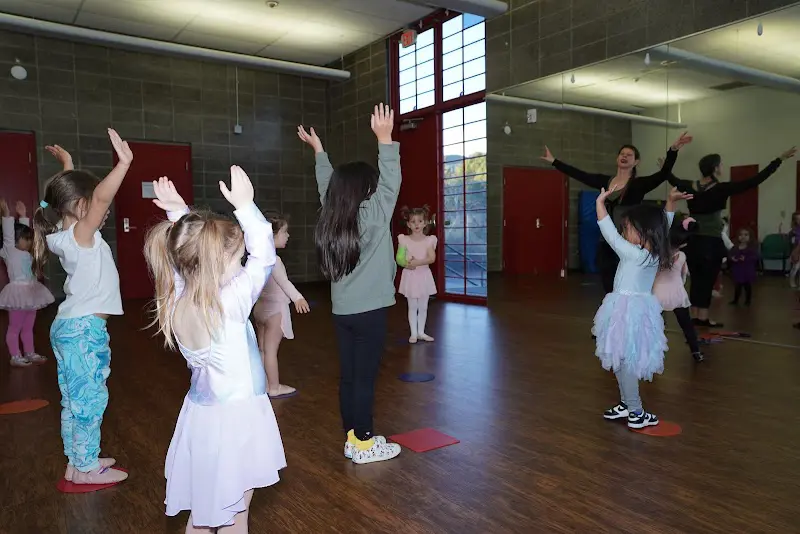
Creative Ballet
A pre-graded level for the youngest children to introduce the beginning concepts of dance and gradually prepare them for the more formal environment of the Pre-Primary level. Introduce the key elements of the ballet technique in an engaging manner specific to young children’s level of understanding. Increase the dancer’s flexibility. Teach the dancer to follow instructions using creative techniques specific to their age. Introduce the structure of a ballet class to the young dancer: warm-up, exercises, dances, across the floor, cool-down and stretch. Focus on musicality while dancing.
Tap
Ballet Technique
Ballet Technique classes at SCB follow the SCB syllabus, and instill a strong ballet foundation focused on developing technique, strength, individuality, and expression. These classes involve annual assessment by a panel of professional experts, and focus on developing both mindset and the physical skills required to pursue dance.
Ballet Technique & Rehearsals
Ballet Technique & Rehearsals is a core component of the pre-professional training program, focusing on developing dancers' physical condition and readiness for performance roles.
Intermediate/Advanced Adult Ballet
For adults at any level, and teenagers who are new to ballet. Whether you are a beginner or previous professional, ballet class is a wonderful way to stay in shape, stretch tight muscles, challenge your mind and feel beautiful.
Stretch & Cool Down
Post-class cool-down routine designed to improve flexibility, reduce muscle soreness, and promote recovery after intense dance training sessions.
Variations/Pointe/Clinic
Specialized sessions focusing on classical variations, pointe work for advanced dancers, or clinics dedicated to extra practice on pirouettes, allegro, music, and artistry.
Modern/Jazz
Exploration of different styles of dance, including contemporary movements and jazz techniques, to broaden a dancer's stylistic repertoire.
Beginner Adult Ballet
For adults at any level, and teenagers who are new to ballet. Whether you are a beginner or previous professional, ballet class is a wonderful way to stay in shape, stretch tight muscles, challenge your mind and feel beautiful.
Jazz
Jazz is a dance style with African roots, characterized by isolations, a low center of gravity, and high energy, evolving into diverse popular styles seen on stage and screen.
Ballet Technique
Ballet Technique is a fundamental class for professional training, focusing on developing strength, flexibility, and artistry required for demanding performance roles.
Pointe
Pointe work technique involves dancing on the tips of the toes using pointe shoes, requiring significant strength and skill, and is introduced only when a dancer is deemed ready.
Everybody Moves Adaptive Dance Program for Youth with Cognitive Disabilities
Southern California Ballet’s Everybody Moves Adaptive Dance Program is designed for children with cognitive and learning disabilities. The adaptive dance program offers a fun, expressive outlet for physical activity which can accommodate those whose disabilities may prevent participation in other sports programs.
Ballet Technique & Modern
Ballet Technique & Modern integrates classical ballet training with modern dance techniques, emphasizing torso movement, contract-release, floor work, and improvisation.
Mixed Level Adult Tap
For adults at any level, and teenagers who are new to ballet. Whether you are a beginner or previous professional, ballet class is a wonderful way to stay in shape, stretch tight muscles, challenge your mind and feel beautiful.
Ballet Technique & Character
Ballet Technique & Character combines essential ballet training with the study of character dance, which comprises traditional folk or national dance styles integral to story ballets.
Body Conditioning
Exercises and training methods designed to strengthen the body, improve stamina, and enhance overall physical condition crucial for dancers.
Character
Classes focused on character dance, which involves embodying different personas and styles derived from folk and traditional dances.
Warm-Up
A preparatory session to activate muscles, increase blood flow, and prepare the body for the demands of dance class.
Intermediate Adult Ballet
For adults at any level, and teenagers who are new to ballet. Whether you are a beginner or previous professional, ballet class is a wonderful way to stay in shape, stretch tight muscles, challenge your mind and feel beautiful.
Workshops
In-School Workshops - The Nutcracker
In partnership with Poway OnStage, Southern California Ballet can come to your school to teach The Nutcracker! Featuring high-caliber instruction from expert ballet teachers who help stage the actual show, our 60-minute workshop will give students the opportunity to learn basic ballet movements and terminology, the history and background of The Nutcracker, simplified choreography from one of our four featured dances, about the various costumes the dancers wear, and about pointe shoes and pointe work.
Camps
Summer Dance Camps at Southern California Ballet
During the dance camp at SCB, students will learn about ballet, do ballet-related crafts, and make new friends. The week will culminate with an in-studio presentation for the parents to enjoy. The young dancers will enjoy crafts including making props for their dances and painting scenery for the ballets. Teachers will also introduce other more contemporary dance styles, freedom of movement, and dancing in groups.
Frequently Asked Questions
How do I contact Southern California Ballet?
Call Southern California Ballet at (858) 674-1006 or visit http://www.southerncaliforniaballet.org/.
Is Southern California Ballet open on weekends?
Yes, Southern California Ballet is open on weekends — Saturday: 9:00 AM - 12:00 PM.
Does Southern California Ballet offer morning classes?
Yes, Southern California Ballet has morning availability. Monday: 3:30 - 7:00 PM, Tuesday: 3:30 - 7:00 PM, Wednesday: 3:30 - 7:00 PM, Thursday: 3:30 - 7:00 PM, Friday: 3:30 - 7:00 PM, Saturday: 9:00 AM - 12:00 PM.
Does Southern California Ballet have Saturday classes?
Yes, Southern California Ballet is open Saturdays: 9:00 AM - 12:00 PM.
How much do classes cost at Southern California Ballet?
Classes at Southern California Ballet start at $210.
More studios near this location
Discover other dance studios around San Diego, California.