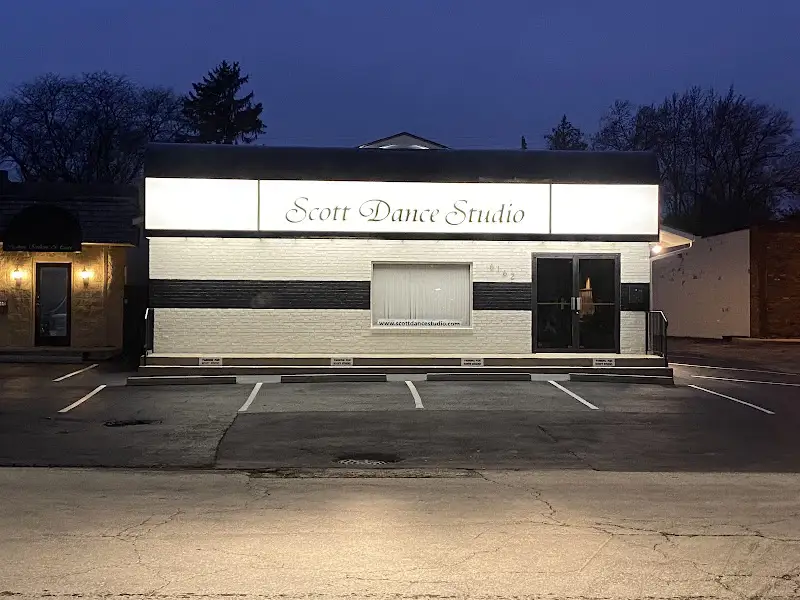
Le Danse Ballroom Club
Address
2640 East 62nd Street
Indianapolis, Indiana 46220
Opening Hours
- Monday: 1:00 - 9:30 PM
- Tuesday: 1:00 - 9:30 PM
- Wednesday: 1:00 - 9:30 PM
- Thursday: 1:00 - 9:30 PM
- Friday: 1:00 - 9:30 PM
- Saturday: Closed
- Sunday: Closed
About Le Danse Ballroom Club
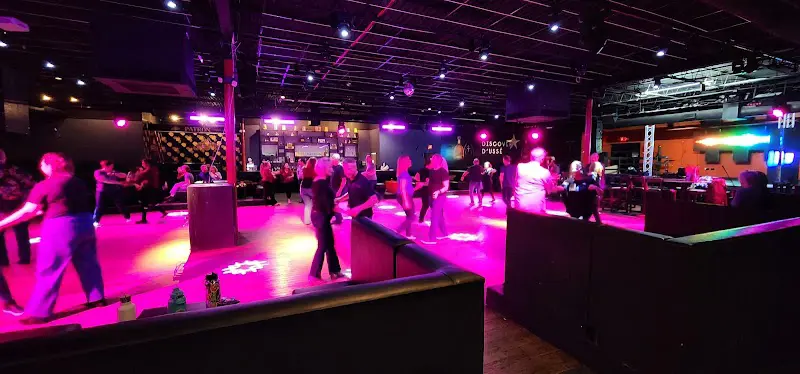
Le Danse Ballroom Club, located in Indianapolis, Indiana, is a vibrant hub dedicated to the art and joy of dance. We offer a comprehensive program in a wide array of ballroom and social dance styles, providing expert instruction for dancers of all levels. Our curriculum includes beloved ballroom classics such as Waltz, Foxtrot, Tango, Viennese Waltz, Quickstep, Samba, Cha Cha, Rumba, Paso Doble, and Jive. Beyond traditional ballroom, we also cultivate talent in popular genres including Salsa and Argentine Tango. Our highly experienced instructors boast over 20 years of teaching expertise and a commitment to continuous, in-depth training, ensuring a fun and supportive learning environment. We foster trust, respect, and confidence, encouraging students to immerse themselves in the learning process and cooperate with one another. Le Danse Ballroom Club aims to help students become exceptional dancers through our time-proven system. We bridge the gap from lessons to social dancing by hosting regular Friday night practice parties, and we are dedicated to fostering a vibrant dance community in Indianapolis. We encourage prospective students to contact us for current specials and to learn more about our offerings.
Programs from Le Danse Ballroom Club
36 programs available
Classes
Argentine Tango Lessons
Peabody Lessons
Jive Lessons
Paso Doble Lessons
Quickstep Lessons
Viennese Waltz Lessons
Bolero Lessons
Hustle Lessons
Merengue Lessons
Samba Lessons
Mambo Lessons
Cha-Cha Lessons
Rumba Lessons
Waltz Lessons
Foxtrot Lessons
Swing Lessons
Salsa Lessons
Tango Lessons
Argentine Tango Lessons
Passionate and intense with dramatic style gives the Argentine Tango its distinct personality. This dance is very intimate with controlled footwork and leg movements by both partners. The music for the Argentine Tango is beautiful helping the dancers react with fabulous styled patterns.
Peabody Lessons
It is a very fast Foxtrot set to Dixieland Jazz or Ragtime music. It's primarily a dance with long, gliding steps. Dancers use many intricate quick steps set against a figure called the "open box". It is popular in the larger ballrooms where dance space is not a serious problem.
Jive Lessons
Originating in the United States in the 1940s, Jive was influenced by the Boogie, Rock & Roll, African/American Swing and Lindyhop. Jive is an energetic dance, with plenty of knee-lifting, bending, and rocking of the hips. The fastest of the Latin dances, Jive incorporates lots of kicks and flicks and an even twirling of the woman. The feet are well-controlled under the body with the knees close together.
Quickstep Lessons
Elegant, smooth and glamorous, Quickstep dancers are energetic while it should appear that the feet of the dancers barely touch the ground. Upper body posture must be straight and strong throughout each movement. The Quickstep usually follows a 4/4 time pattern. The basic feel of the Quickstep is slow-quick-quick, slow-quick-quick, with "slow" taking beats one and two, and "quick-quick" taking beats three and four. Most of the "slow" steps are taken on the heel, while most "quick" steps are taken on the balls of the feet.
Viennese Waltz Lessons
The elegance and charm of the Viennese Waltz reminds one of glamorous balls in Europe and the USA in the 1800‘s and early 1900’s. A waltzing couple rotates around the floor, revolving gracefully around each other. The Viennese Waltz is a quick, rotating dance, much faster-paced than the classic, slow Waltz. This dance is characterized by sweeping turns that move gracefully around the floor. It is known for its simple and elegant rotational movement. The Waltz developed in Central Europe, originating from the Austrian folkdance known as the "Landler." The dance arrived in Vienna during the 1800s, and then became popular throughout Europe and America.
Bolero Lessons
Bolero is the slowest rhythm dance. The music tempo is only 96 beats per minute. The basic footwork timing is slow-quick-quick. The basic step of bolero is a long, sweeping step to the side on the slow beat, followed by a rock step forward or backward, on the quick-quick beats. Slow, graceful, romantic, movements and actions characterize the bolero.
Hustle Lessons
Hustle refers to one of several couples' disco dances that became popular during the 1970s. Similar to swing dance , hustle is enjoyed by couples today in both nightclubs and ballrooms. Hustle was originally made famous by the hit movie Saturday Night Fever . It consists of 4/4 counts and syncopated 3 counts. Several patterns are similar to East Coast Swing.
Merengue Lessons
Merengue has it's origins in the Dominican Republic, and since 1930 has been recognized as that country's national dance. The word Merengue, in Spanish means whipped egg whites and sugar, perhaps a reference to the dance's sweet and frothy character. As with many ballroom dances, exactly how Merengue originated may be up for debate. Two of the more popular folklore stories, in their historical context, are these: In the late seventeenth century, Spain ceded a third of the island of Hispaniola to France. This French colony, Saint-Dominique, became the most productive agricultural colony in the Western Hemisphere largely due to the importation of huge numbers of slaves who were forced to labor in the fields. One story says that Merengue originated with these slaves of the French colony, who were chained together and out necessity forced to drag one leg as they cut sugar to the beat of drums. Hence the motion of stepping with one leg and dragging the other leg to meet it. A hundred years later tensions were boiling in Saint-Dominique among the oppressed slaves and in 1790 the slaves revolted. Both French and Spainish colonists fled in fear to Cuba and the independent nation of Haiti was established in 1804. The most popular story of the origin of Merengue centers around a great hero the revolution. He was welcomed home with a victory celebration. Although it was well know that the hero loved to dance, he had been severely crippled in one leg during the revolt. All he could do now was step with one leg and drag the other. Out of respect for him, all the people dancing at the celebration imitated him and the Merengue was born. However the Merengue was born, both stories create a picture of the Merengue motion, the stepping to the side and dragging the other foot to close. Merengue is a name used to describe the music as well as the dance. >From the middle of the 18th century, Merengue developed as rural music in both Haiti and the Dominican Republic. As more educated musicians were introduced to the Merengue rhythm, the music started to be modified. In the 1930's the writing of more "respectable" lyrics brought the music of Merengue to the urban classes and Merengue began to disseminate rapidly
Samba Lessons
Lively and joyous, the Samba is the Brazilian "Carnival" dance and the official native dance of Brazil. Like many Latin dances, it's origins are many and varied. The first forms of Samba originated in Africa and were taken to Bahia, the northeastern region of Brazil, by slaves sent to work the sugar plantations. After slavery was abolished in the 1880's, there was a mass migration to the cities and this ritualistic dance soon found it's way to the capital of Brazil in Rio de Janeiro. From there Samba was on it's way -- with perhaps a few bumps in the road. The word "Samba" is likely derived from the word "Semba", which in the African Bantu language means "naval bump," and depicts the intimacy and "invitation" to dance that is common to many Afro Latin dances. As might be imagined, these first forms of Samba were considered obscene and in bad taste by Brazil's upper classes, and for a time the dance was prohibited and practiced only in lower class neighborhoods and even in secret societies. Around the beginning of the 20th century, the popularity of Samba increased and it began to establish itself as a favorite form of expression in the Carnival celebrations in Rio de Janeiro. In time, dance groups would parade the streets during Carnival time, dazzling the crowds and even competing with one another with their animated steps and elaborate costumes. As the Samba became associated with the "Carnival Brasileiro", it became a means of instilling national pride in the masses and Samba music and dance were officially recognized and sanctioned. Samba was first danced as a street dance, and Samba today, in many forms, is still danced mainly as a solo dance in Brazil. So where did our ballroom Samba come from? As the stigma of the Samba's impropriety dissolved, members of high society in Rio gradually embraced the dance, but they modified it to be danced in the more "proper" closed ballroom dance position. It was also combined with elements of another Brazilian dance called the Maxixe, resembling a two-step. And Samba began to migrate to Europe and the United States. The Maxixe form of the Samba was introduced in both Europe and the United States around the beginning of the 20th century. Another form of the Samba called Carioca (which means "from Rio de Janeiro") was popularized by Fred Astaire and Ginger Rogers in their first film together, "Flying Down to Rio," in 1939. Many credit Carmen Miranda with helping to popularized the Samba in the US with her films, particularly "That Night in Rio" (1941). In the 1950's Princess Margaret of England help further popularized the Samba in Europe and consequently, in America, and in 1956 Samba was formalized as an International ballroom dance. Animated, fun and infinitely expressive, the Samba is the ultimate "party" dance. It's taught as an Intermediate level dance at TC Dance Club Kansas City.
Mambo Lessons
Originally from Cuba, the Mambo is enjoyed throughout the world at both the social and competitive dance levels. The mambo is a favorite of ballroom audiences because of its high energy level and infectious rhythms. Popularized by many current singers and Ricky Martin, Lou Bega, and Shakira. The Mambo is fascinating and diverse.
Cha-Cha Lessons
Of all the Latin dances, the Cha Cha is the newest. A spin off of the Mambo, Cha Cha made its appearance in the early 1950's in American dance clubs. Enrique Joren, a Cuban musician, who credited with inventing the Cha Cha. He wanted to create music that a wider range of people could dance to than could handle the very fast Mambo , popular at the time. He developed music with a slower, medium rhythm Mambo beat. When slowed down his musical version revealed a 3 count beat that people then began to put steps to.
Rumba Lessons
Rumba is called the "the dance of romance" and remains one of the most popular American ballroom dances today. It is considered the most sensual of all the Latin ballroom dances. Because of its slow rhythm and expressive hip movements, dancing Rumba gives partners the opportunity to move sensually, to flirt and to be sexy. Rumba's earliest origins were in African folk dances. It was originally a frenzied fast past dance, with sexually-charged aggressive movements. The Rumba came to Cuba and the Caribbean islands with the importation of slaves as far back as the 1500's. American Rumba, like other Latin dances, can be traced more immediately to a Cuban dance called the Son, which developed as a modified version of these original Afro dances. The Cuban Son was first introduced in American in 1913. However, real interest in Latin music and dances didn't begin to catch on in the US until 1929 and after. People like bandleader Xavier Cugat performed and popularized Latin music and dance across the United States in the 1920's and 30's and Cugat became the top Latin orchestra leader of the day. Movies too helped popularize Latin dance, and the Rumba as well. Cugat and his band appeared and played in feature films and in 1935 George Raft played a suave dancer in a movie called "Rumba" where the hero wins the heart of an heiress (Carol Lombard) through their mutual love of dancing. By now the American Rumba was becoming even slower than the Cuban Son it was derived from and it was being modified to become a socially acceptable ballroom dance. American Rumba, like Waltz, is a box step, performed in 4/4 time. But unlike Waltz, it is characterized by a bent leg style, with well timed weight shifts that result in a hip sway know as Latin or Cuban Motion. This is what gives Rumba its sensual sexy style. Three steps are taken to one measure of music, on the two, three and four count. The intervening time is for turns and weight transfer. You can count Rumba "slow, quick, quick." A long way from the frenzied pace of its Afro-Cuban roots, Rumba has today become much slower and more stylized, but it still retains it's essential character, the play between the man and the woman and the sexual tension that make it the ultimate dance of passion.
Waltz Lessons
The Waltz itself is Viennese, and it evolved in Austria and Bavaria under such names as the Dreher, the Laendler and the Deutscher. The close contact with one's partners body contrasted sharply with the stately dances of the aristocracy - the minuets, polonaises, and quadrilles - in which one kept one's distance. When it moved into Viennese dance halls, partners were allowed to touch! This was unheard of, and led to the dance being slandered by many officials of the church and leaders of the Austrian state, as it was in the rest of the European community. Because it was a favored dance of the young, however, it continued to be danced. Because of its transition to dance halls and city gatherings, it evolved into a light dance for polished floors and parties. Its music also changed, becoming more refined and orchestrated. Mozart was a huge fan of the waltz, and in one of his operas, Don Giovanni, three waltzes are played at once in one scene! Clearly, the dance could not be stopped. Today the Waltz is a very popular and stylish dance allowing one to dance with a variety of partners. The waltz is for experienced dancers as well as novices.
Foxtrot Lessons
Vaudeville actor Harry Fox originated the Foxtrot in the summer of 1914. As part of his act, Harry Fox was doing "trotting" steps to the very popular ragtime music, and people referred to his dance jokingly as "Fox's Trot." But the name caught on. Shortly thereafter exhibition dancers, the Vernon Castles, popularized the Foxtrot in their performances and the elite of the dancing world were soon trying to capture the unusual style of movement of the Foxtrot. Another performer, G.K. Andersn danced his way from London to the U.S. and with Josephine Bradley won many American competitions. And the Foxtrot spread. The Foxtrot was the most significant development in all of ballroom dancing. The combination of quick and slow steps period more flexibility and gave much greater dancing pleasure than the one-step and two-step which it replaced. There is more variety in the Foxtrot than in any other dance, and in some ways it is the most challenging dance to learn! Variations of the Foxtrot include the Peabody, the Quickstep and Roseland Foxtrot. Even dances such as the Lindy and the Hustle are derived to some extent from the Foxtrot.
Swing Lessons
It was 1926, and the Savoy Ballroom in New York City's Harlem was the place to be. With its block long dance floor, the Savoy attracted the city's best dancers and the best black bands playing an upbeat swinging jazz style of music. George "Shorty" Snowden was watching the bouncy dancing and glanced down to see a newspaper headline of the day which read, "Lindy Hops The Atlantic," a reference to the flight of Charles Lindberg. George dubbed what he was watching the "Lindy Hop" and the name stuck. With the advent of the Lindy Hop and a dance called the Jitterbug, people began dancing to the swing and jazz music they were hearing from big band greats like Calloway and Benny Goodman. Through the 1930's and 40's these dances became popularized through countless Hollywood movies and dance competitions and this style of dancing swept the U.S. being danced everywhere from night clubs to the streets. The reaction of most traditional dance instructors and studios was less than enthusiastic, with their spokespeople predicting the quick demise of the unruly style of dancing. By the 1940's, however, the popularity of the Swing style dances couldn't be ignored and dance studios began refining the style to suit their clientele and a crowded dance floor. Music, of course, was changing all the time from the 1920's to the 1990's, and the original Lindy Hop, Jitterbug and Swing evolved across the county into a wide variety of regional styles of dance. As the Lindy Hop, Jitterbug and various Swing styles were adapted by dance studios for the general public there developed a ballroom East Coast Swing and a ballroom West Coast Swing. TC Dance Club provides instruction in both East and West Coast Swing. Both dances are not only very popular with our students, but just a tremendous amount of fun.
Salsa Lessons
It is not easy to define Salsa. To some, Salsa can include a variety of Latin Dances from Bachata to Merengue to Mambo. In ballroom dance, however, Salsa is generally taught as a dance separate from the others, but very similar to Mambo. The term Salsa refers to both the dance and the music. So to know where Salsa dancing began we must know where Salsa music itself came fromm, and Salsa is a fusion of many, many influences. Salsa music has its very earliest roots in African music and in what is called the Cuban Son. The Cuban Son is a term used to describe a style of music that originated in Cuba and was popular beginning in the 1920's. Salsa music is characterized by a recurring eight-beat pattern and Salsa dance patterns use six steps done to eight beats of music. Predominant in Salsa music is the beat of the Clave, a pair of cylindrical wooden sticks that are struck together. This sound is the key to keeping the rhythm of the music and the dance. Salsa -- the music and the dance -- migrated to New York from Cuba and Puerto Rico beginning in the 1920's and, once in the U.S, mixed with other musical styles to create what we've come to know as Salsa today. The early roots of Salsa may be Cuban, but because the U.S. ended relations with Cuban in 1962, the advancement of this musical and dance style is due to the Puerto Rican population. As is often the case with dance and music, its rise is tied to great promotion, and, many believe, in the case of Salsa, to companies like Fania Records. Founded in 1967 by bandleader Johnny Pacheco, this fledging record label began recording and promoting artists and composers like Willie Colon, whose fresh Latin sound epitomized the aggressive energy and restlessness of the New York Puerto Rican barrio youth. The record company actively promoted the already familiar term "Salsa" to identify this new sound. The 1970's saw a surge in the popularity of Salsa, with the Fania label helping to lead the way. Through the 80's and 90's and into today, Salsa dancing became more widespread and the large increase in the Latin American population in the United States has brought with it both a surge in popularity and an appreciation for this exciting music and dance we call Salsa.
Tango Lessons
The Tango originated in Argentina in the latter part of the 19th century. The horsemen and cowboys (called Gauchos) that rode the Argentine plains sought relaxation in the evening after a hard day's labor in the lower end brothels of Buenos Aires. There developed both a style of music, that was haunting and suggestive, and a style of dance, a reflection of the interaction of the Gauchos and the women who sought their favor. Both the musical style and the dance were known as Tango. This early music and dance were highly sexual and therefore regarded as obscene. As the Tango was absorbed into broader society, it had to, of necessity, lose some of it's original offensiveness, but not it's basic sultry style. Tango spread to Europe and America, became fashionable, and enjoyed great popularity in the theatres and cabarets of the well to do, particularly because of it's risqué nature and origins. Ballroom Tango has descended from the tango styles that resulted when Tango came to Europe and America. The dance was simplified, lost it's original abrasiveness and was adapted to the preferences of conventional ballroom dancers. These preferences included that Tango be danced to more "modern" music in 4/4 measure. In addition to using different music than the original Argentine tangos, modern Ballroom Tango has different steps and styling, with more grounded steps, dramatic staccato movements and the characteristic "head snaps." Nonetheless, the sexy flavor and flair of the original dance remains.
Group Class
Frequently Asked Questions
How do I contact Le Danse Ballroom Club?
Call Le Danse Ballroom Club at (317) 259-1147 or visit http://www.ledanseballroom.com/.
What days is Le Danse Ballroom Club open?
Le Danse Ballroom Club is open on Monday, Tuesday, Wednesday, Thursday, Friday.
Does Le Danse Ballroom Club have evening hours?
Yes, Le Danse Ballroom Club offers evening hours. Monday: 1:00 - 9:30 PM, Tuesday: 1:00 - 9:30 PM, Wednesday: 1:00 - 9:30 PM, Thursday: 1:00 - 9:30 PM, Friday: 1:00 - 9:30 PM.
What city is Le Danse Ballroom Club in?
Le Danse Ballroom Club is in Indianapolis, Indiana.
What is Le Danse Ballroom Club's phone number?
Reach Le Danse Ballroom Club directly at (317) 259-1147.
More studios near this location
Discover other dance studios around Indianapolis, Indiana.