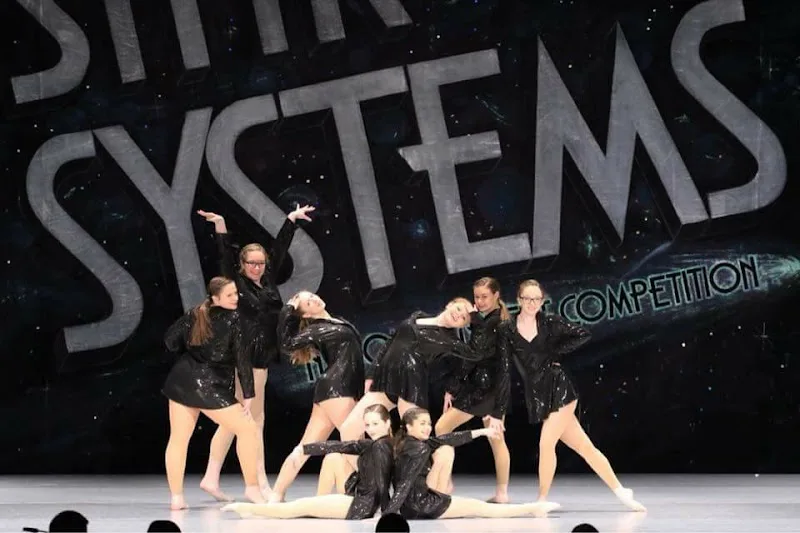
Studio of the Dance Arts - Dance studio in Seneca Falls, New York
Google Maps

Studio of the Dance Arts

Verified
Address

63 Fall Street

Seneca Falls, New York 13148

10 programs

About Studio of the Dance Arts

Located in the heart of Seneca Falls, New York, Studio of the Dance Arts provides a comprehensive dance education for aspiring artists of all ages. This esteemed studio offers a diverse curriculum, including foundational and advanced training in Ballet, Hip Hop, Jazz, Tap, Contemporary, and the elegance of Ballroom dance. Instructors at Studio of the Dance Arts are dedicated to fostering a nurturing and inspiring environment where students can explore their passion for movement and artistry. The studio is committed to developing well-rounded dancers, focusing on technical proficiency, creative expression, and performance quality. Whether a student is just beginning their dance journey or looking to refine their skills, Studio of the Dance Arts offers a welcoming space to grow and shine in the world of dance.

Styles offered at Studio of the Dance Arts

Programs from Studio of the Dance Arts

10 programs available

Classes

dance classes

Pointe

Pointe is the part of classical ballet technique that concerns pointe work, in which a ballet dancer supports all body weight on the tips of fully extended feet. A dancer is said to be en pointe when the dancer's body is supported in this manner, and a fully extended vertical foot is said to be en pointe when touching the floor, even when not bearing weight. Pointe work is performed while wearing pointe shoes, which employ structural reinforcing to distribute the dancer's weight load throughout the foot, thus reducing the load on the toes enough to enable the dancer to support all body weight on fully vertical feet

Modern dance

A style of theatrical dance that rejects the limitations of classical ballet and favors movement deriving from the expression of inner feeling. Developed in the 20th cent., primarily in the United States and Germany, modern dance resembles modern art and music in being experimental and iconoclastic. Modern dance is a more relaxed, free style of dance in which choreographers use emotions and moods to design their own steps, in contrast to ballet's structured code of steps. It has a deliberate use of gravity, whereas ballet is rigid in its technique. Because of the common history, the two forms (classical ballet and modern) share a similar terminology and structure.

Hip hop dance

Hip hop dance refers to dance styles, mainly street dance styles, primarily danced to hip hop music or that have evolved as a part of the hip hop culture. These later styles are sometimes referred to as new school or new style while the older styles, including breakdance and various funk styles that were incorporated into hip hop, are considered old school. Hip hop dancing is evolving in many different directions today, heavily influenced by the evolution of hip hop music and its popularity in media.

Lyrical dance

Lyrical dance is a fusion of ballet and jazz dance techniques. Lyrical dance challenges choreographers and dancers to use motion to interpret music and express emotion. A lyrical dancer's movements attempt to show the meaning of the music. Lyrical jazz is a very passionate and emotional dance style. It portrays certain emotions such as love, and tells a story through every movement made. A solid, ballet-based technique is an essential component of this advanced style of dance, as is a facility with various other forms of jazz, some contemporary/modern dance, and proper placement and bodily alignment.

Contemporary dance

Contemporary dance is a style of expressive dance that combines elements of several dance genres including modern, jazz, lyrical and classical ballet. Contemporary dancers strive to connect the mind and the body through fluid dance movements. Contemporary dance stresses versatility and improvisation, unlike the strict, structured nature of ballet. Contemporary dancers focus on floorwork, using gravity to pull them down to the floor. This dance genre is often done in bare feet. Contemporary dance can be performed to many different styles of music.

Ballet

Ballet dance is a formalized form of dance . It is a highly technical form of dance with its own vocabulary. It has been influential as a form of dance globally and is taught in ballet schools around the world. Ballet dance works (ballets) are choreographed, and also include mime, acting, and are set to music (usually orchestral but occasionally vocal). It is best known in the form of classical ballet, notable for its techniques, such as pointe work, turn-out of the legs; its graceful, flowing, precise movements and its ethereal qualities. Later developments include neoclassical ballet and contemporary ballet.

Jazz

A strong technical foundation enables a dancer to focus on the stylistic and performance aspects of dance. Technique is essential for jumps and turns, where correct posture is essential to properly execute such moves. Also, jazz dancers' strong and sharp movements are greatly aided by a good background in ballet technique. Center control is important in jazz technique. The body's center is the focal point from which all movement emanates, thus making it possible to maintain balance while executing powerful movements. Jazz classes require some form of moderate intensity stretching in order to warm up the muscles and help prevent injuries. Some techniques used in the warm up consist of elongating leg muscles and strengthening the core.

Acrobatics

Acrobatics (from Greek Akros, high and bat, walking) is one of the performing arts and is also practiced as a sport. Acrobatics involves difficult feats of balance, agility, and coordination. Nearly any performance or sport which involves full-body activity especially in short, highly controlled bursts of activity can be considered acrobatics. Typical examples are, first and foremost, all the subdivisions of gymnastics and trapeze work but specialized activities like ballet and diving could also be included. In a narrow sense, the term "acrobatics" refers to "acrobatic gymnastics," a specialized subdivision of gymnastics.

Tap dance

Tap dance was developed in the United States during the nineteenth century, and is popular nowadays in many parts of the world. The name comes from the tapping sound made when the small metal plates on the dancer's shoes touch a hard floor. This lively, rhythmic tapping makes the performer not just a dancer, but also a percussive musician. Tap dancers make frequent use of syncopation. Choreographies typically start on the eighth or first beatcount. Another aspect of tap dancing is improvisation. This can either be done with music and follow the beats provided or without musical accompaniment, otherwise known as a capella dancing.


Frequently Asked Questions

How do I contact Studio of the Dance Arts?

Call Studio of the Dance Arts at (315) 568-8269 or visit http://www.studioofthedancearts.com/.

Does Studio of the Dance Arts have a website?

Yes, you can find Studio of the Dance Arts online at http://www.studioofthedancearts.com/.

What city is Studio of the Dance Arts in?

Studio of the Dance Arts is in Seneca Falls, New York.

What is the best way to contact Studio of the Dance Arts?

The quickest way is to call (315) 568-8269 or visit http://www.studioofthedancearts.com/.

What is Studio of the Dance Arts's phone number?

Studio of the Dance Arts's phone number is (315) 568-8269.