Ecclesia School of the Arts

Verified
Address

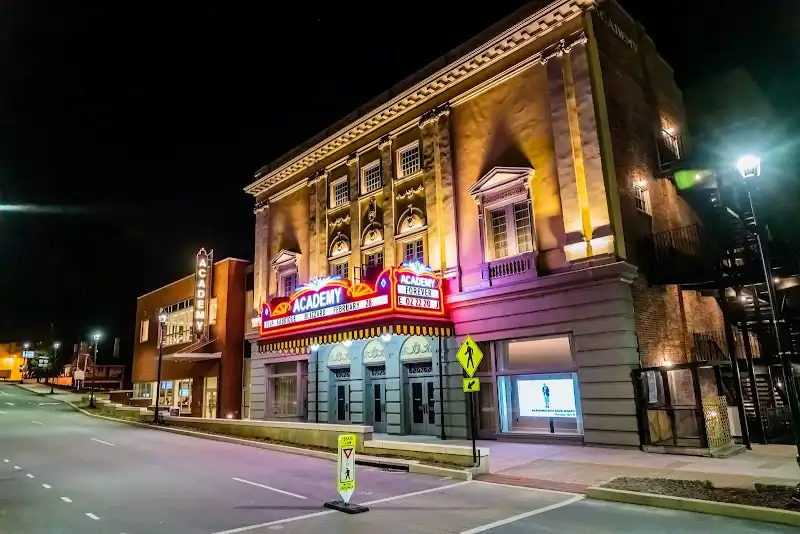
621 Court Street

Lynchburg, Virginia 24504

Opening Hours
  • Monday: 2:30 - 7:45 PM
  • Tuesday: 2:30 - 7:15 PM
  • Wednesday: 2:30 - 6:15 PM
  • Thursday: 3:30 - 6:45 PM
  • Friday: Closed
  • Saturday: 10:00 AM - 12:00 PM
  • Sunday: Closed
38 programs

About Ecclesia School of the Arts

Ecclesia School of the Arts, located in Lynchburg, Virginia, is a vibrant hub for artistic development, with a special emphasis on dance. Dedicated to fostering a love for artistic expression and to glorify the Lord, the studio offers a comprehensive dance education for students of all ages, from young children to adults. Our diverse curriculum encompasses a wide array of genuine dance styles, including classical Ballet, ranging from introductory levels to advanced pre-professional training. Students can also explore the rhythmic precision of Tap, the energetic movements of Jazz and Hip Hop, and the expressive fluidity of Modern and Lyrical dance. For those with a passion for performance, our Musical Theater dance classes provide a Broadway-inspired experience. We prioritize developing technical skill, musicality, and artistry across all disciplines, ensuring a well-rounded dance journey. Ecclesia School of the Arts provides personalized instruction through private lessons, tailored to individual student needs and goals. Our dedicated staff includes Owner & Director Michelle Velastegui, Studio Manager Anne Shaffer, and instructors such as Abby Owen, who specializes in Ballet and Tap. We cultivate a supportive, nurturing, and professional environment where every student can grow in their artistic journey, instilling passion and skill guided by our committed team. Registration is currently open for the Spring 2026 semester; we encourage early registration to secure spots, with waitlists available for popular classes.

Styles offered at Ecclesia School of the Arts

Programs from Ecclesia School of the Arts

38 programs available

Classes

Private Dance Lessons

Requirements - Student is at least 9 - Student is already taking classes at ESA - Student is not on a scholarship

Musical Theatre Dance (ages 12 and up)

Musical Theatre is a jazz-based class filled with Broadway style dancing and music. Classes incorporate the style of dance one would typically see on a Broadway stage. This form of dancing emphasizes learning performance skills such as connecting with the audience and facial expressions.

Modern/Lyrical (ages 10 and up)

Modern/Lyrical combines the soft, free style of lyrical—a ballet-jazz hybrid—and the fluid form of modern —a blend of technique and emotion. Students will develop balance, control, and musicality while exploring dance as a means of spiritual, emotional, individual, and corporate expression.

Hip Hop Teens (ages 12 and up)

Hip Hop is the pinnacle of self-expression. Classes include warm up, moving across the floor, style explorations (popping, locking, waving, gliding, etc.), and freestyle circles. These classes are for dancers who like self-expression, physical challenges, and healthy competition. Hip Hop is for ages 12 and up.

Jazz (Kids ages 8-12 & Teens ages 13 and up)

Jazz is a form of dance that combines both African and European dance styles. This high-energy dance has a liveliness that sets it apart from traditional dance forms, such as classical ballet. It pairs animated expressions with sharp yet fluid motions. One of the most distinct characteristics is the use of isolation, a jazz technique in which dancers isolate one part of the body.

Dance Conditioning (ages 12 and up)

Conditioning is designed to increase a dancer’s range of motion, balance, muscle flexibility, and overall strength. The class involves a combination of cardio, bodyweight exercises, and weight utilization. Weights and bands are tools that are often used to increase difficulty.

Tap 1 & Tap 2

These classes are designed for students ages 8 and up. Placement is required. Each class will start with basic technique and move forward adding skill development at each specified level.

Tiny Tappers (ages 4-7) Tap

Tiny Tappers is designed for young dancers ages 4-7 to learn basic tap dancing steps. The class will focus on coordination, rhythm, and introduce basic steps through combinations and dance games.

Pointe Classes

Students must be in level 4 or higher and have passed our pre-pointe exam in order to being considered for pointe. Students must also be at least 12 and taking dance conditioning and a minimum of two technique classes.

Level 6 Ballet (placement required)

Students at this level have a vast knowledge of classical ballet vocabulary. In this level, the study of jumps in the various ways and the development of the “balon” quality (bounce, springiness & elasticity) is stressed. The artistry of dance is highlighted. Here, technique and artistry start to fuse into one. Complex combinations with beating steps performed in a quick tempo are also given. The execution of all fundamental movements in adagio and petit & grand allegro are carried through with finishing touches. Refining technique continues to challenge as students are now expected to perform at a professional level.

Level 5 Ballet (placement required)

This level is designed to give the necessary training to students wishing to study seriously. This level consolidates all of the basic elements of classical ballet training, with a continued emphasis on posture, coordination, stability, and expressiveness; it encourages the technical requirements along with establishing artistry, musicality, and feeling. Stresses technical mastery of beating steps, more complex turns, developing smoothness of graceful movements & suppleness, harmonious movement transitions, more complex adagio, and allegro, and developing elevation in the big jumps. Good stance and placement required for pirouettes and grand allegro. At this level, articulate footwork and secure use of legs is crucial. Dancers continue to work on coordination of the whole body with the addition of fluidity of movement.

Level 4 Ballet (placement required)

Students at this level have a strong understanding of classical vocabulary and can now adequately demonstrate use of line and musical performance. They are given extended barre exercises with increasing demi-pointe work, stretching, and strengthening. Placement is refined, and big jumps are introduced. The use of correct arms and heads is emphasized. Students strengthen their ability in various turns and develop a smooth connection of arms and body. There is an increased emphasis on turns and grand allegro, and linking moves together in more complex and expressive ways. At this level, an emphasis is placed on detail and artistry, therefore, increasing stamina, concentration, and discipline. Dancers will learn to communicate expression and feeling in their movement.

Level 3 Ballet (ages 12 and up - some experience required)

Classwork continues to improve the dancer’s spatial awareness and orientation of the body. At this level, an emphasis is placed on turning, jumping, and linking steps. Students are expected to show awareness of basic technique, appropriate timing, and musicality. Classical ballet lines should be established along with a new vocabulary for traveling steps, elevation, and pirouettes. This level continues to consolidate the basic elements of posture, aplomb, transference of weight, with increased use of the demi-pointe.

Level 2 Ballet (ages 9-11)

Building on what was learned in Level 1, students continue to build their vocabulary with new exercises at the barre and in the center in order to continue developing proper alignment and classical technique.

Level 1 Ballet (ages 7-9)

Level 1 is where the basic building blocks of ballet are introduced and classes become much more structured. This level introduces elementary exercises for mastering the placement of the body, legs, arms & head, and developing elementary skills in the coordination of steps. Basic musicality & rhythm, “safe & healthy” rotation mechanisms, and the proper serious attitude toward the art are emphasized. Students are introduced to the foundations of barre work in order to develop proper alignment and classical technique.

Pre-Primary (ages 3-4) and Primary (ages 5-6) Levels Ballet

These introductory levels to classical ballet are designed for young children. Students will learn to take simple directions from the teacher while developing flexibility, musicality, and refining motor skills. Emphasis is placed on eye-hand/eye-foot exercises for basic coordination, lengthening attention span & following instructions, timing, rhythm, musicality, & expression, basic classroom etiquette, simple ballet terminology, basic movement themes such as jumping, balletic runs, walks, spinning, and skipping, working in simple formations (lines and circles), and identifying directions (right, left, forward, backward, etc.).

Private Lessons
$30.00

Private Lessons are charged per 30 minutes and scheduling must be done through ESA administration. Please do not make arrangements directly with a teacher. Please email info@EcclesiaArts.com to set up private lessons.

90-minute class
$82.50

Tuition rates for regular classes are per month. Registration is for the entire semester (see withdrawal policy), so tuition rates do not change regardless of the number of classes per month. Some months have more classes and some have fewer, depending on the month. Regular Classes

60-minute class
$55.00

Tuition rates for regular classes are per month. Registration is for the entire semester (see withdrawal policy), so tuition rates do not change regardless of the number of classes per month. Some months have more classes and some have fewer, depending on the month. Regular Classes

45-minute class
$50.00

Tuition rates for regular classes are per month. Registration is for the entire semester (see withdrawal policy), so tuition rates do not change regardless of the number of classes per month. Some months have more classes and some have fewer, depending on the month. Regular Classes

Regular Classes

Tuition rates for regular classes are per month. Registration is for the entire semester (see withdrawal policy), so tuition rates do not change regardless of the number of classes per month. Some months have more classes and some have fewer, depending on the month.

modern/lyrical

jazz

tap

ballet

Private Dance Lessons

Private Dance Lessons are available for students who meet specific requirements.

Musical Theatre Dance

Musical Theatre is a jazz-based class filled with Broadway style dancing and music. Classes incorporate the style of dance one would typically see on a Broadway stage. This form of dancing emphasizes learning performance skills such as connecting with the audience and facial expressions.

Modern/Lyrical

Modern/Lyrical combines the soft, free style of lyrical—a ballet-jazz hybrid—and the fluid form of modern —a blend of technique and emotion. Students will develop balance, control, and musicality while exploring dance as a means of spiritual, emotional, individual, and corporate expression.

Hip Hop

Hip Hop is the pinnacle of self-expression. Classes include warm up, moving across the floor, style explorations (popping, locking, waving, gliding, etc.), and freestyle circles. These classes are for dancers who like self-expression, physical challenges, and healthy competition. Hip Hop is for ages 12 and up.

Jazz (Kids & Teens)

Jazz is a form of dance that combines both African and European dance styles. This high-energy dance has a liveliness that sets it apart from traditional dance forms, such as classical ballet. It pairs animated expressions with sharp yet fluid motions. One of the most distinct characteristics is the use of isolation, a jazz technique in which dancers isolate one part of the body.

Dance Conditioning

Conditioning is designed to increase a dancer’s range of motion, balance, muscle flexibility, and overall strength. The class involves a combination of cardio, bodyweight exercises, and weight utilization. Weights and bands are tools that are often used to increase difficulty.

Tiny Tappers

Tiny Tappers is designed for young dancers ages 4-7 to learn basic tap dancing steps. The class will focus on coordination, rhythm, and introduce basic steps through combinations and dance games.

Level 6 Ballet

Students at this level have a vast knowledge of classical ballet vocabulary. In this level, the study of jumps in the various ways and the development of the “balon” quality (bounce, springiness & elasticity) is stressed. The artistry of dance is highlighted. Here, technique and artistry start to fuse into one. Complex combinations with beating steps performed in a quick tempo are also given. The execution of all fundamental movements in adagio and petit & grand allegro are carried through with finishing touches. Refining technique continues to challenge as students are now expected to perform at a professional level.

Level 5 Ballet

This level is designed to give the necessary training to students wishing to study seriously. This level consolidates all of the basic elements of classical ballet training, with a continued emphasis on posture, coordination, stability, and expressiveness; it encourages the technical requirements along with establishing artistry, musicality, and feeling. Stresses technical mastery of beating steps, more complex turns, developing smoothness of graceful movements & suppleness, harmonious movement transitions, more complex adagio, and allegro, and developing elevation in the big jumps. Good stance and placement required for pirouettes and grand allegro. At this level, articulate footwork and secure use of legs is crucial. Dancers continue to work on coordination of the whole body with the addition of fluidity of movement.

Level 4 Ballet

Students at this level have a strong understanding of classical vocabulary and can now adequately demonstrate use of line and musical performance. They are given extended barre exercises with increasing demi-pointe work, stretching, and strengthening. Placement is refined, and big jumps are introduced. The use of correct arms and heads is emphasized. Students strengthen their ability in various turns and develop a smooth connection of arms and body. There is an increased emphasis on turns and grand allegro, and linking moves together in more complex and expressive ways. At this level, an emphasis is placed on detail and artistry, therefore, increasing stamina, concentration, and discipline. Dancers will learn to communicate expression and feeling in their movement.

Level 3 Ballet

Classwork continues to improve the dancer’s spatial awareness and orientation of the body. At this level, an emphasis is placed on turning, jumping, and linking steps. Students are expected to show awareness of basic technique, appropriate timing, and musicality. Classical ballet lines should be established along with a new vocabulary for traveling steps, elevation, and pirouettes. This level continues to consolidate the basic elements of posture, aplomb, transference of weight, with increased use of the demi-pointe.

Level 2 Ballet

Building on what was learned in Level 1, students continue to build their vocabulary with new exercises at the barre and in the center in order to continue developing proper alignment and classical technique.

Level 1 Ballet

Level 1 is where the basic building blocks of ballet are introduced and classes become much more structured. This level introduces elementary exercises for mastering the placement of the body, legs, arms & head, and developing elementary skills in the coordination of steps. Basic musicality & rhythm, “safe & healthy” rotation mechanisms, and the proper serious attitude toward the art are emphasized. Students are introduced to the foundations of barre work in order to develop proper alignment and classical technique.


Frequently Asked Questions

How do I contact Ecclesia School of the Arts?

Call Ecclesia School of the Arts at (434) 818-1844 or visit http://www.ecclesiaarts.com/.

What days is Ecclesia School of the Arts open?

Ecclesia School of the Arts is open on Monday, Tuesday, Wednesday, Thursday, Saturday.

Does Ecclesia School of the Arts offer morning classes?

Yes, Ecclesia School of the Arts has morning availability. Monday: 2:30 - 7:45 PM, Tuesday: 2:30 - 7:15 PM, Wednesday: 2:30 - 6:15 PM, Thursday: 3:30 - 6:45 PM, Saturday: 10:00 AM - 12:00 PM.

Is Ecclesia School of the Arts open on weekends?

Yes, Ecclesia School of the Arts is open on weekends — Saturday: 10:00 AM - 12:00 PM.

What city is Ecclesia School of the Arts in?

Ecclesia School of the Arts is in Lynchburg, Virginia.