Fred Astaire Dance Studios - Portland Maine
Address
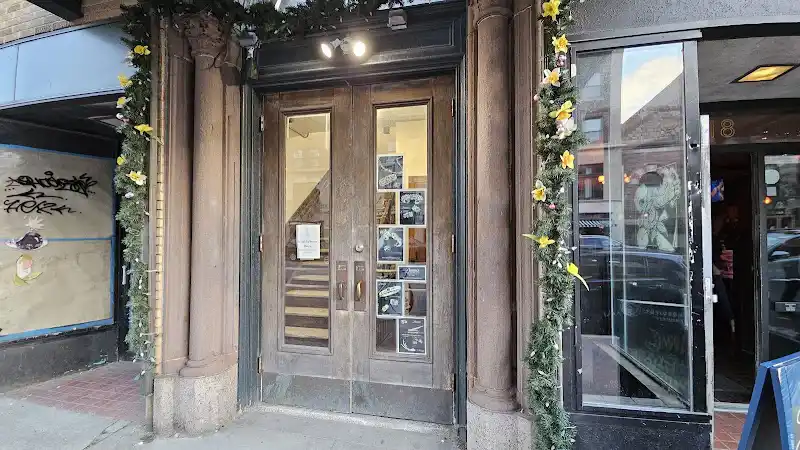
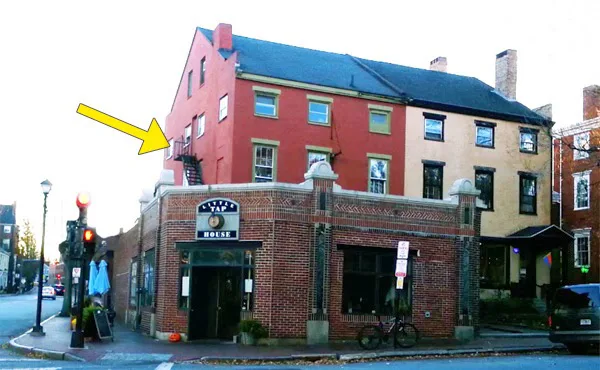
156 State Street
Portland, Maine 04101
Opening Hours
- Monday: 12:30 - 8:30 PM
- Tuesday: 12:30 - 8:30 PM
- Wednesday: 12:30 - 8:30 PM
- Thursday: 12:30 - 8:30 PM
- Friday: 12:30 - 8:30 PM
- Saturday: Closed
- Sunday: Closed
About Fred Astaire Dance Studios - Portland Maine
Fred Astaire Dance Studios - Portland Maine, located in the heart of Portland, Maine, offers a premier dance education with a focus on ballroom and social dance styles. This esteemed studio provides instruction in a variety of popular dances, including Waltz, Tango, Foxtrot, Cha Cha, Rumba, Samba, and Jive, all falling under the umbrella of their comprehensive Ballroom program. Beyond the classic ballroom repertoire, Fred Astaire Dance Studios - Portland Maine also features vibrant Latin dance classes, with dedicated instruction in Salsa and Bachata, allowing students to explore the energetic rhythms of Latin America. While specific instructor names and founding year are not detailed in the provided content, the studio is known for its experienced and passionate instructors who guide students of all levels, from absolute beginners to seasoned dancers. They cater to a diverse range of ages and offer programs designed for social dancing, wedding preparation, and competitive pursuits. Fred Astaire Dance Studios - Portland Maine is dedicated to fostering a welcoming and supportive environment where individuals can learn, grow, and discover the joy of dance.
Programs from Fred Astaire Dance Studios - Portland Maine
105 programs available
Classes
Two-Step
Country Western
Quickstep
Viennese Waltz
Waltz
Foxtrot
Tango
Argentine Tango
Smooth
Bachata
Jive
Paso Doble
Bolero
Samba
Cha Cha
Rumba
Merengue
East Coast Swing
Hustle
Mambo
Salsa
Rhythm
West Coast Swing
West Coast Swing (or Western Swing) quickly gained popularity across the U.S. because of its sophisticated style and easy adaptation to contemporary rock music. A regional style popular on the West Coast of the U.S., the dance made a bid for national recognition in the late 50s and continues to grow in popularity in the 21st century. West Coast Swing incorporates many forms of swing including the Lindy, Shag, Whip and Push. Versatile dancers, eager to display their talent, are continually innovating new and interesting movement in swing. After nearly five decades, Western Swing has endured the test of time, and as with the Eastern Swing, it is possible to dance in a relatively small area. The West Coast Swing is danced in place in a slot. Its slower tempo allows for freer rhythmic interpretations using single, double, triple and various other syncopated rhythms. A relaxed, sometimes shuffling movement and upright position are characteristic. Occasional use of hip movements and or push style is also used to enhance the style of the dance.
West Coast Swing
Waltz
The Waltz dates back to the country folk dances of Bavaria, some 400 years ago, but was not introduced into “society” until 1812, when it made its appearance in English ballrooms. The Waltz is a progressive and turning dance with figures designed for both a larger ballroom floor and the average dance floor. The use of sway, rise and fall highlight the smooth, lilting style of the Waltz.
Viennese Waltz
The Viennese Waltz, as its known today, was first danced by European royalty during the era of the Austrian composers, Johann Strauss I and Johann Strauss II (1800s). Its hallmark charisma and social grace is typical of that period of history. The Viennese Waltz became the only dance of that era which is still performed by the American public. Waltz music expresses eloquently, the carefree gaiety of those bygone days that are so closely linked to Vienna, The Blue Danube and Strauss. The most startling innovation of the dance was the close proximity of the partners; so daring, it only became socially acceptable in Great Britain after it was danced publicly by Queen Victoria. It is a dance that requires a great deal of control and stamina, due mainly to the tempo of the music. The Viennese Waltz is a progressive and turning dance and features some figures that are danced in place. Rise and fall is used in the dance but differently than in other smooth dances. In Waltz and Foxtrot, a dancer will often rise above their normal standing height but in the Viennese Waltz that’s not done. Rise is created through the knees and body.
Tango
During the greatest period of the dance evolution in American history (1910-1914), the Tango made its first appearance. It was instantly a hit with the dance-conscious public for its intriguing, asymmetrical, and sophisticated patterns which added a touch of romance to the country’s dance consciousness. The Tango has no clearly defined origin: it may have originated in Argentina, Brazil, Spain, or Mexico, but it clearly descended from an early Spanish folk dance, the Milonga, and bears traces of Moorish and Arabic ancestry. The Tango first came to be known as such, early in the 20th century in Argentina. It was danced, however, under various names throughout all of Latin America. Years later, Argentine plainsmen or “gauchos,” danced a modified version of the Milonga in the bawdy cafes of Buenos Aires. Argentine and Cuban youth later changed the name (and style) to Tango which was more acceptable to society. The Cubans danced it to habanera rhythms which were syncopated and obscured the basic Milonga rhythm. It was not until after it caught on in Paris and was re-introduced to Argentina, that the music was restored to its native style. For over 60 years, the four beat Tango rhythm has endured and continued to enjoy popularity everywhere as the music is universal with many types of sub-styles. Of all the dances which came into being in the early 20th century, only the Tango has continued to enjoy this much popularity. The Tango is a progressive dance where the staccato movement of the feet and flexed knees highlight the dramatic style of the dance. The Tango is one of the most highly stylized ballroom dances. It is dramatic with measured crossing and flexing steps and poised pauses. Perhaps the main reason for its widespread popularity is that it is danced close to the partner.
Samba
The Samba is festive and lighthearted, and performed today in all parts of the world. It brings to mind pictures of Rio’s festive and exotic Carnival! In its native land, the Samba is usually danced to a moderately slow tempo which contrasts vividly with the spirited version favored in U.S. The Samba has withstood the test of time and still ranks high among social as well as competitive dancers.
Salsa
Oozing with a sensuous style, Salsa has it all – passion, energy, and joy. As a dance form, Salsa has its origins in the Cuban Son and the Afro-Cuban dance, Rumba. As it relates to the popular music style, Salsa is continuously evolving, and new modern dance styles are associated and named according to the geographical areas that they are developed in. Some of the popular Salsa styles are Cuban, Columbian, Los Angeles, New York (or Eddie Torres Style), Palladium, Puerto Rican, Rueda, and On Clave. In the early 1970s in New York City, several franchised and independent dance studios, sensing the popularity of the burgeoning dance form capitalized on the Salsa craze by developing a standardized curriculum in which to teach the dance to an eager public. Salsa taught in Fred Astaire Dance Studios is based on Mambo patterns, but danced on the “one.” Take the first step towards realizing your ballroom dance goals, at your local Fred Astaire Dance Studio! Contact us today, at Fred Astaire Dance Studios – and ask about our Introductory Offer just for new students! We’ll look forward to seeing you on the dance floor.
Rumba
Rumba (or “ballroom-rumba”), is one of the ballroom dances which occurs in social dance and in international competitions. It is the slowest of the five competitive International Latin dances: the Paso Doble, the Samba, the Cha Cha, and the Jive being the others. This ballroom Rumba was derived from a Cuban rhythm and dance called the Bolero-Son; the international style was derived from studies of dance in Cuba in the pre-revolutionary period which was then popularized by the descendants of African slaves of Cuba. Its tantalizing rhythm first invaded the United Sates in the early 1930s, and has remained one of the most popular social dances. The Rumba is characterized by a smooth, subtle hip motion and a heavy walking step. Of the three styles of Rumba that were introduced to the United States, the Bolero-Rumba, the Son-Rumba and the Guaracha-Rumba, only the Bolero-Rumba (shortened to Bolero) and the Son-Rumba (shortened to Rumba) have survived the test of time. The Guaracha-Rumba quickly faded in popularity when the more exciting Mambo was introduced to Americans in the late 1940s. The Rumba is danced in place as the steps are quite compact. Although the Rumba is not danced with the same body contact that is used in smooth-style dances, there may be times when partnership looks and feels more attractive when a closer contact is felt. A smooth and subtle movement of the hips is characteristic of the Rumba.
Quickstep
The Quickstep is a progressive and turning dance moving along the Line of Dance, utilizing Walks and Chasse movements. Rise and Fall, Sway and Bounce action are the basic characteristics of the International Style Quickstep.
Paso Doble
The Paso Doble (or pasodoble), in its classical form dates back many centuries and was originally intended for use at bullfights when the matador was victorious in the arena. The music adapted itself so beautifully to the dance that the villagers danced to the exciting, lively music for hours on end. Americans first viewed the Paso Doble when flamenco dancers used this music to dance the role of a bullfighter. It has been a favorite (in its ballroom version) since the 1930s. In the ballroom version of the Paso Doble, the gentleman usually portrays the bullfighter and the lady is his cape, although there are times when a very strong aggressive action in certain movements seems to suggest the actions of the bull. The Paso Doble moves around the floor and is characterized by sharp movements. A most helpful aid in acquiring the proper feeling is to visualize the pageantry of the matadors, as they make their grand entry into the bull ring and feel the attitude that is displayed during the fight.
Merengue
Both Haiti and the Dominican Republic claim Merengue as their own. According to Haitian lore, an earlier ruler of their country had a lame son who liked to dance. In order that this beloved prince would not feel self-conscious about his affliction, the entire populace took to dancing as though they all were lame. The Dominican’s version is that the dance originated at a fiesta that was given to honor a returning war hero. When the brave warrior rose to dance, he limped on his wounded left leg. Rather than make him feel self-conscious, all the men present favored their left legs as they danced. In both countries for many generations, the Merengue was taught and danced with these back stories in mind. When couples got up to dance the Merengue, the man favored his left leg and the lady favored her right leg; while flexing their knees a bit more than usual and at the same time leaning the body slightly to the same side. Haitians and Dominicans alike refer to the Merengue as their “singing dance;” this is understandable when you consider the exhilarating brightness of the staccato rhythm. The Merengue is danced in place to Latin music.
Mambo
No other dance from south of the (U.S.) border has ever attained the instantaneous popularity than the zestful Mambo did when it was first introduced from Latin America. The extent of the Mambo’s reach can be observed by the widespread use of its rhythm by Tin Pan Alley. Love ballads were written to a slow Mambo beat, novelty songs to a fast Mambo beat, and rock ‘n’ roll numbers were being tailored to the tempo. Across the nation, dancers who had never progressed beyond the Foxtrot and Waltz were clamoring for Mambo instruction. The popularity of the Mambo was almost entirely the work of Cuban bandleader Perez Prado. During the early 1930s, Latin style dance bands were coming increasingly popular with American audiences and filling the airwaves with Rumbas, Sambas and Tangos. Then, in the early ’50s, Prado recorded the song, “Mambo Jambo,” and the fun was on. The Mambo can be danced according to the individual dancer’s temperament. Conservative dancers can stay in a closed position, while the more daring can perform steps that break apart and completely separate themselves from each other. Spins and turns are quite popular with Mambo dancers. Ready to take your first step towards a new and exciting lifestyle? Contact us, at Fred Astaire Dance Studios. Inside our doors, you’ll discover a warm and friendly atmosphere that will inspire you to reach new heights, and have lots of fun doing it!
Jive
Jive evolved from the popular American dances of the 1930’s such as Jitterbug, Boogie-Woogie, Lindy Hop, East Coast Swing, Shag, Rock “n” Roll etc. Eventually all of these styles of dance would be coupled under the Hat of “Jive”, but in the 1940’s a combination of these styles was given the name “Jive” and the dance was born.
Hustle
In the late 1960s and throughout the 1970s, discotheques (or discos), with high quality sound systems and flashing lights became a popular form of entertainment in Europe and the U.S. Early ‘70s dancing in discos was mostly freestyle dancing (similar to the “rock” style exhibited by pop stars of the day like The Jackson 5) along with the prerequisite dress code of bellbottom pants and elevator shoes. In 1973, at a disco called The Grand Ballroom, a new type of “touch dance” without a name was being exhibited by females. This simple 6-count step with a very basic form, including inside and outside single turns, would give birth to what would later be called “Hustle.” The young men of the club took notice, and became interested in this new dance. As it began to gain popularity and more people began to participate, the Hustle started to evolve. In the Latin discotheques of that day, including The Corso, Barney Goo Goo’s, and The Ipanema, disco music was used as a bridge between live band sets. In these clubs, touch dancing had always been present in the form of mambo, salsa, cha cha and bolero. Although considered very much a touch dance, the Hustle was now performed mostly side-by-side and incorporated a lot of the intricate turn patterns of the mambo. The dance also included multiple turns and hand changes with a rope-y feel to the arm movements; hence, the dance was now referred to as the “Rope Hustle” or “Latin Hustle.” As dance contests sprung up across the U.S. and the phenomenon spread, many Hustle dancers were also involved in the professional performing arts community and contributed long balletic arms and elasticity to the movement. Around this time, the dance also began to move from a slotted pattern into a rotational one. As dance contests increased, young competitors were seeking an edge and so acrobatic and adagio movements were introduced into the dance for performances and competitions. In 1975, this new field of entertainment inspired nightclubs, hotels and television programs to hire young and innovative professionals to perform. With these new opportunities opening up, the young dancers sought out innovative ways to excite the club audiences. Throughout the late 1970s, even though Hustle was still taught in many different forms (4-count Hustle, the Latin or Rope Hustle) by dance studios, the most exciting form was done by NYC club dancers and competitors who performed the 3-count count Hustle (&-1-2-3.). The NYC Hustle dancers from the ‘70s paved the way for the rest of the Hustle community across the U.S. As it continued to evolve, Hustle began to borrow from other dance styles including smooth ballroom, from which it took traveling movements and pivots and other partner dance forms such as swing and the Latin rhythm dances. Hustle is danced to the contemporary pop dance music of the last 20 years. It is a fast, smooth dance, with the lady spinning almost constantly, while her partner draws her close and sends her away. Free rhythmic interpretation is characteristic of this dance. So what are you waiting for? Give us a call at Fred Astaire Dance Studios. And ask about our Introductory Offer for new Students… our talented and friendly dance instructors can help you realize your ballroom dancing goals!
Foxtrot
The Foxtrot dance step originated around 1912, during the ragtime music era, marked by partners dancing closer together and ad-libbing to the music. It evolved through various changes, embracing smoother, more rhythmic music and emphasizing smoother dancing and individualized expression by 1917. The International and American styles now differ in dance hold and freedom of expression, with figures often designed for larger ballroom floors but adaptable to smaller ones.
East Coast Swing
Eastern Swing or East Coast Swing or just Swing, evolved from the Lindy Hop and is perhaps the most famous American folk dance. The best known forms of Swing include the Charleston, Black Bottom, and Shag. In the early 1940s, these forms consolidated into what was called the Lindy. The Lindy was first danced as a modified box step, with a slight shuffling movement. The shuffling movement of the original Lindy can be likened to today’s single rhythm in Swing. As the shuffling, or single rhythm progressed, it evolved into both the double and triple time Lindy. Today all three form the basis of good Swing dancing. About 55 years ago, Swing was danced in the Harlem section of NYC at a time when band greats such as Chic Webb, Duke Ellington and Benny Goodman were popular and it was there where the dance took on most of today’s popular steps and styling. For many years, the better establishments frowned upon the wilder forms of Swing dancing because the acrobatics involved limited the number of people who could dance at one time. It is possible however, to do fine dancing in a relatively small area. There is no question that Swing is here to stay. In all parts of the country one can find dancers adding their own interpretations and changes to style. All dances, in order to survive, must be built up from a firm basic movement so that adlibbing and complete freedom of expression can be interpreted into the dance. Swing has these attributes. Swing dancing was revived in the late 1990’s to the early 2000’s by such bands as the Brian Setzer Orchestra and the Big Bad Voodoo Daddy. The Swing is a spot dance that does not move along the line of dance. Free rhythmic interpretation is characteristic, using single, double or triple rhythms. A relaxed shuffling movement and use of upper body sway is also used to highlight the Swing. Give Fred Astaire Dance Studios a call today, and take advantage of our special introductory offer for new students. You’ll be on your way to confident dancing after just one lesson!
Two Step
Country Western Two-Step
Surprisingly, country western dance didn’t actually begin in the United States. This uniquely American dance style is actually a melting pot of influences from many cultures. As westward expansion in the U.S. increased, it brought people together from different regions of the world who had little or no exposure to one another. Dance became a unifying language that helped bring these new Americans together. Settlers from Europe brought dance styles from their country’s traditional festivals with them. African-American influences were also present, which added a syncopation to the rhythms, as well as steps that were closer to the ground and more rooted in the earth than those from Europe. But foreign influences were not the only ones that created country western dance. The steps and movements are also a product of the habits and dress of the American cowboy. The open-legged and “wide-stanced” steps, and the heel-toe turns likely developed due to the realities of dancing in spurs. Likewise, many of the holds tend to be more hand-to-hand rather than the full-body contact of traditional European dances, which may have been due to ladies trying to protect their clothing from being sullied or torn. Country western dance can be broken into two categories: (1) partner dances (including lead-follow and pattern dances), and (2) group dances (including line dances and square dances). Many different partner dances are done to country western music. These include Two Step, Polka, East Coast Swing, West Coast Swing, and more.
Cha Cha
Cha Cha is a dance of Cuban origin, and derives its name from the rhythm developed by a syncopation of the fourth beat. Cha Cha gathers its flavor, rhythm and charm from a derivation of three primary sources: the Mambo, Rumba, and indirectly, the Lindy (with each being danced to the same one-two-three triple step). The Cha Cha, while sprung up from Latin American roots in Cuba, really flowered under North American influence. While closely identified with the aforementioned Mambo, Cha Cha has enough intrinsic individuality to be classified as a distinct dance. Much has been written about the history of the Rumba and the Mambo, while little has been explored about the origins of Cha Cha, despite it being a dance to be reckoned with. Cha Cha’s tempo is anywhere from slow and staccato to fast and lively. It is very much an on-the-beat dance and hard not to inject one’s own feelings into it. This facet, more than any other, makes the dance fun for people of all ages. It is a real let-it-all-out type of dance. Cha Cha is danced in place as the steps are quite compact, with the feet usually no more than 12 inches apart. Popularized in the 1950’s with music by such artists as Tito Puente and Tito Rodriguez, today it is danced to popular night club kind of music. Get started today! Contact us at Fred Astaire Dance Studios, and ask about our money-saving Introductory Offer for new students!
Bolero
The Bolero was introduced to a U.S. audience in the mid-1930s; and at that time, it was danced in its classical form, which was performed to a constant beat of drums. It emerged from this classical form to what was called Son, with a faster and livelier tempo (later renamed as the Rumba). Spanish dancer Sebastian Cereza is credited with creating the dance in the year 1780; since then, the Bolero has remained a true source of expressing sensuous feelings. It is truly the “dance of love.” The Bolero is one of the most expressive dances: the use of arms and hands, legs and feet, as well as facial expression, all contribute to its beauty. Get started with your dancing adventure today, at Fred Astaire Dance Studios. We look forward to seeing you on the dance floor!
Bachata
Bachata originated in the Dominican Republic in the Caribbean during the early 20th century, and includes Indigenous, African and European musical elements. It became popular in the rural neighborhoods of the island, but was censored almost to extinction during the Trujillo dictatorship (1930-1961) for being a “backward, lower art form for country-people”. After the end of Trujillo’s reign, Bachata flourished again and quickly spread to other parts of Latin America and Mediterranean Europe.
Argentine Tango
Argentine Tango is a dance and music that originated in Buenos Aires at the turn of the century, developed in the melting pot of cultures that was Buenos Aires. The word Tango was used at the time to describe various music and dance.
Private Introductory Lesson
Experience dance magic with our $39 Private Introductory Dance Lesson – Unleash your inner dancer today! Limited availability, book now!
Para Dance Ballroom Dance Lessons
Adaptive Dance program at Fred Astaire Dance Studios for individuals of all abilities and ages, including those who use wheelchairs or have mobility limitations. Offers customized programs with certified instructors experienced in wheelchair dance sport instruction, adapting most ballroom dance styles for a fun and inclusive experience.
hip-hop
Hip-hop programs for kids and teens that help young people get active, stay healthy, develop grace and poise, establish goal-setting behaviors, and build confidence.
line dancing
Line dancing programs for kids and teens that help young people get active, stay healthy, develop grace and poise, establish goal-setting behaviors, and build confidence.
Latin dance
Latin dance programs for kids and teens that help young people get active, stay healthy, develop grace and poise, establish goal-setting behaviors, and build confidence.
ballroom dance
Ballroom dance lessons for kids and teens, offering a positive outlet for exercise and self-expression, or competitive ballroom dance instruction for those aspiring to be DanceSport Champions.
Anniversary Dance
Celebrate lasting love with a special moment for all couples. Feel relaxed and prepared so you can enjoy every moment. Create a lasting memory that reflects your personality and love story.
Reception Entrance
Start the night with energy and personality. Gain confidence on the dance floor for your wedding day. Create a lasting memory that reflects your personality and love story.
Bridal Party Routine
Get the whole crew involved — fun, upbeat group choreography. Learning to dance with your friends makes it more fun! More and more couples are including their wedding party in dance lessons.
Mother-Son Dance
Honor the bond with confidence and grace. Feel relaxed and prepared so you can enjoy every moment. Create a lasting memory that reflects your personality and love story.
Father-Daughter Dance
A heartfelt tradition, guided step by step. Feel relaxed and prepared so you can enjoy every moment. Create a lasting memory that reflects your personality and love story.
First Dance
Your big moment together, make it unforgettable. Gain confidence on the dance floor for your wedding day. Make your first dance memorable for you and your guests.
Waltz First Dance
Your first dance is more than a tradition — it’s a moment you’ll remember forever. Your big moment together, make it unforgettable.
Wedding Dance Programs
Customized Wedding Dance Instruction Programs help you learn the dance style of your choice — and give you the confidence and skills to show off your personality on the dance floor. Learning to dance together is a great way to relax, connect, and enjoy the planning process.
Gold
Silver Program
Bronze Trophy Program
Our most popular! which enables students to dance on any size dance floor, to any music, with any partner, and feel comfortable and confident.
Beginner and Social Foundation Programs
Our Beginner and Social Foundation Programs teach newer students the step patterns and techniques to move comfortably around the dance floor.
Group Classes
Group classes complement your private lessons, because this is where patterns, technique, and style are learned. Group classes also enable you to meet other students with similar dancing goals, develop balance, and learn the mechanics of dancing.
ballroom dancing
At Fred Astaire Dance Studios, all new dance Students can take advantage of our special money-saving Introductory Offer! Simply complete and submit the Intro Offer form on this website to get yours, and we’ll contact you right away to learn about your dance goals and help you set up your first Lesson. Once you discover how much fun ballroom dancing can be, we know you’ll be back for more!
competitive dancing
Every Fred Astaire Dance Studio offers a special Introductory Offer for new Students. Beyond that, our prices vary as dance lesson programs are designed to fit each student’s specific interests & goals – social dancing, wedding, competitive dancing, etc. At Fred Astaire Dance Studios, we will tailor programs to meet your individual goals and budget.
social dancing
Every Fred Astaire Dance Studio offers a special Introductory Offer for new Students. Beyond that, our prices vary as dance lesson programs are designed to fit each student’s specific interests & goals – social dancing, wedding, competitive dancing, etc. At Fred Astaire Dance Studios, we will tailor programs to meet your individual goals and budget.
Introductory Offer
At Fred Astaire Dance Studios, all new dance Students can take advantage of our special money-saving Introductory Offer! Simply complete and submit the Intro Offer form on this website to get yours, and we’ll contact you right away to learn about your dance goals and help you set up your first Lesson. Once you discover how much fun ballroom dancing can be, we know you’ll be back for more!
Practice Parties
Our proven teaching method includes Private Lessons, Group Lessons and Practice Parties, to ensure you learn as much as possible, in the shortest amount of time, with the most retention… and have the most FUN doing it!
Group Lessons
Our proven teaching method includes Private Lessons, Group Lessons and Practice Parties, to ensure you learn as much as possible, in the shortest amount of time, with the most retention… and have the most FUN doing it!
Private Lessons
Our proven teaching method includes Private Lessons, Group Lessons and Practice Parties, to ensure you learn as much as possible, in the shortest amount of time, with the most retention… and have the most FUN doing it!
Wedding Dance Lessons
Whether you’re interested in wedding dance lessons, a new hobby or way to connect with your partner, improving your social life, physical or emotional well-being, or taking your skills to the next level, you’ve come to the right place — and we’re happy you’re here!
ballroom dance
And at Fred Astaire Dance Studios, learning how to ballroom dance is always fun! Step inside, and discover a warm, welcoming & 100% non-judgmental community that will inspire you to reach new heights, feel and look confident, and have fun doing it.
wedding dance lessons
Whether you’re interested in wedding dance lessons, a new hobby or way to connect with your partner, improving your social life, physical or emotional well-being, or taking your skills to the next level, you’ve come to the right place — and we’re happy you’re here!
Practice Parties
Our unique teaching system includes private instruction, group Lessons and practice parties, to help you learn as much as possible in as short a time as possible – and enables you to try out your new skills in a casual group setting with your fellow dance students.
Group Lessons
Our unique teaching system includes private instruction, group Lessons and practice parties, to help you learn as much as possible in as short a time as possible – and enables you to try out your new skills in a casual group setting with your fellow dance students.
Private Instruction
Our unique teaching system includes private instruction, group Lessons and practice parties, to help you learn as much as possible in as short a time as possible – and enables you to try out your new skills in a casual group setting with your fellow dance students.
Pro/Am Competitor Training
For those with a competitive edge, we can also help you become a skilled Pro/Am competitor with your Instructor at lots of branded Fred Astaire Regional, Inter-Regional, National and International dance competitions!
Partnership Dances
We offer instruction for all partnership dances– from waltz, tango, cha-cha, and salsa, to country western, swing and club dancing. We can help you with your wedding dance, all of your social dance needs – basically, any dance done with a partner.
Ballroom Dancing
Ballroom dancing is an incredible form of self-expression that boosts your mood and confidence. Whether alone or with friends, feel the happiness and freedom that dancing at Fred Astaire Dance Studios provides.
Ballroom Dance
Experience the joy of ballroom dance and improve your physical and mental wellbeing at Fred Astaire Dance Studios. Join us today! Learn About the Benefits of Dance
West Coast Swing
West Coast Swing (or Western Swing) quickly gained popularity…
Waltz
The Waltz dates back to the country folk dances of Bavaria, some 400…
Viennese Waltz
The Viennese Waltz, as its known today, was first danced by European royalty…
Tango
During the greatest period of the dance evolution in American history…
Samba
When the Brazilian Samba was first introduced to the U.S. Dance Masters…
Salsa
Oozing with a sensuous style, Salsa has it all – passion, energy, and joy…
Rumba
Rumba (or “ballroom-rumba”), is one of the ballroom dances which occurs…
Quickstep
The Quickstep, with its roots in Ragtime, was developed in the 1920’s…
Paso Doble
The Paso Doble (or pasodoble), in its classical form dates back many centuries…
Merengue
Haitians and Dominicans alike refer to the Merengue as their “singing dance;” this…
Mambo
No other dance from south of the (U.S.) border has ever attained the instantaneous popularity…
Jive
Jive evolved from the popular American dances of the 1930’s such as Jitterbug…
Hustle
In 1973, at a disco called The Grand Ballroom, a new type of “touch dance” without…
Foxtrot
Harry Fox, a vaudeville dancer and comedian lent his name to the Foxtrot dance step…
East Coast Swing
Eastern Swing or East Coast Swing (or just Swing), evolved from the Lindy…
Country Western Two-Step
Surprisingly, country western dance didn’t actually begin in the United States…
Cha Cha
Cha Cha is a dance of Cuban origin, and derives its name from…
Bolero
The Bolero was introduced to a U.S. audience in the mid-1930s…
Bachata
Bachata originated in the Dominican Republic in the Caribbean during the early 20th century…
Argentine Tango
The worldwide spread of the Tango came in the early 1900s when wealthy sons of Argentine…
Latin
At Fred Astaire Dance Studios, we offer instruction in American Smooth, American Rhythm, International Ballroom, Latin, and then some! And as a Fred Astaire dance student, you choose which dance style you’d like to learn first based on what’s most appealing to you, and your individual dance goals.
International Ballroom
At Fred Astaire Dance Studios, we offer instruction in American Smooth, American Rhythm, International Ballroom, Latin, and then some! And as a Fred Astaire dance student, you choose which dance style you’d like to learn first based on what’s most appealing to you, and your individual dance goals.
American Rhythm
At Fred Astaire Dance Studios, we offer instruction in American Smooth, American Rhythm, International Ballroom, Latin, and then some! And as a Fred Astaire dance student, you choose which dance style you’d like to learn first based on what’s most appealing to you, and your individual dance goals.
American Smooth
At Fred Astaire Dance Studios, we offer instruction in American Smooth, American Rhythm, International Ballroom, Latin, and then some! And as a Fred Astaire dance student, you choose which dance style you’d like to learn first based on what’s most appealing to you, and your individual dance goals.
Introductory Offer
Claim Intro Offer - $39 Try Dance Classes & Start Dancing Today! One Intro Dance Lesson - Only $39 Try Dance Classes & Start Dancing Today! Buy Now! Claim Intro Offer - $39 Get One Intro Dance Lesson - Only $39
Frequently Asked Questions
How do I contact Fred Astaire Dance Studios - Portland Maine?
Call Fred Astaire Dance Studios - Portland Maine at (207) 653-3085 or visit https://www.fredastaire.com/portlandmaine.
What days is Fred Astaire Dance Studios - Portland Maine open?
Fred Astaire Dance Studios - Portland Maine is open on Monday, Tuesday, Wednesday, Thursday, Friday.
What is Fred Astaire Dance Studios - Portland Maine's phone number?
Fred Astaire Dance Studios - Portland Maine's phone number is (207) 653-3085.
Does Fred Astaire Dance Studios - Portland Maine have evening hours?
Yes, Fred Astaire Dance Studios - Portland Maine offers evening hours. Monday: 12:30 - 8:30 PM, Tuesday: 12:30 - 8:30 PM, Wednesday: 12:30 - 8:30 PM, Thursday: 12:30 - 8:30 PM, Friday: 12:30 - 8:30 PM.
Does Fred Astaire Dance Studios - Portland Maine have a website?
Yes, you can find Fred Astaire Dance Studios - Portland Maine online at https://www.fredastaire.com/portlandmaine.
More studios near this location
Discover other dance studios around Portland, Maine.